



Challenge

Solution

Result
By Lisa Stamm, MLS
Sr. Solution Consultant · Master of Library Science
Upon seeing one, particular image of a cowboy perched triumphantly atop a bucking horse, the energy and movement of both horse and man kinetic and palpable through time and medium, the American West frontier immediately comes to mind. Less immediately apparent is that this image is of a real horse, who is no less a champion than his rodeo rider, and is the registered trademark of the State of Wyoming.
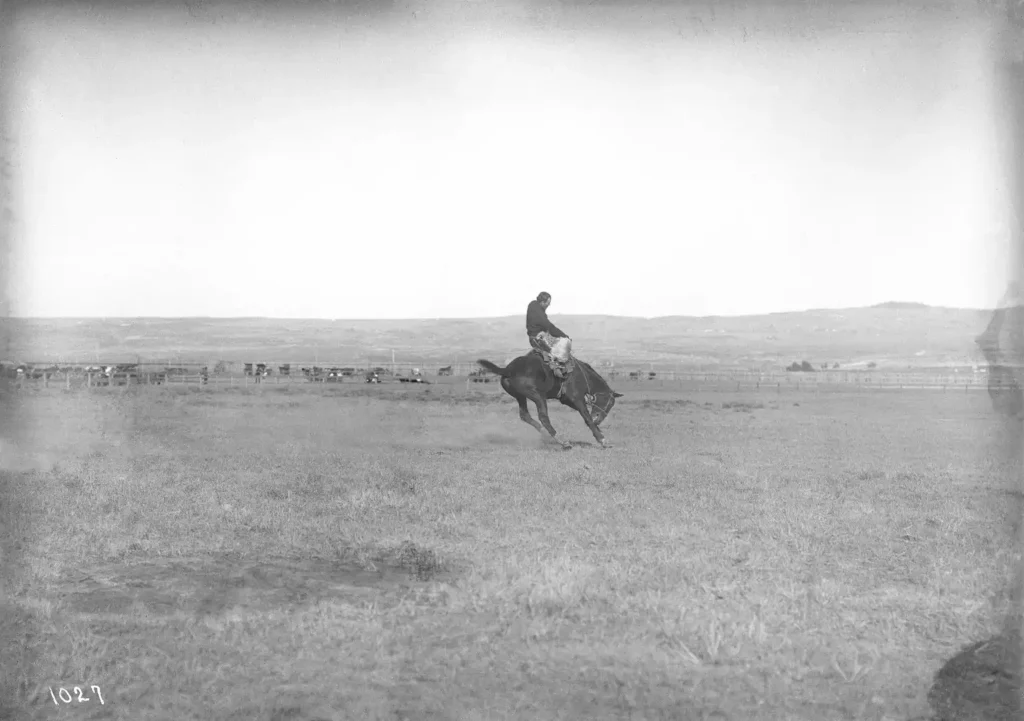
Photo Credit: B.C. Buffum Papers, Courtesy of University of Wyoming American Heritage Center Digital Collections
Bucking Horse & Rider is the formal name of a photograph captured in 1903 of a powerful, legendary black horse named Steamboat being ridden by Guy Holt in a rodeo competition in Laramie, Wyoming. The photo was taken by University of Wyoming professor Bert C. Buffum and, one-hundred and twenty-three years later, a 2,200-pound bronze statue of the iconic scene between infamous, revered horse and fearless, determined rider was installed on campus of the University of Wyoming. More on that university, and its library, to come.
At 97,914 square miles, the State of Wyoming is the ninth largest in the United States, with nicknames of “Big Wyoming,” “Cowboy State,” and “Equality State,” and a motto of “equal rights.” Equality State it is: on December 10, 1869, Wyoming became the first state in the U.S. to guarantee women the right to vote, the right to hold office, the right to own land, and the right to maintain custody of their children. Wyoming was well ahead of the United States as a whole, which ratified the Nineteenth Amendment, guaranteeing women the right to vote, fifty years later in 1920.
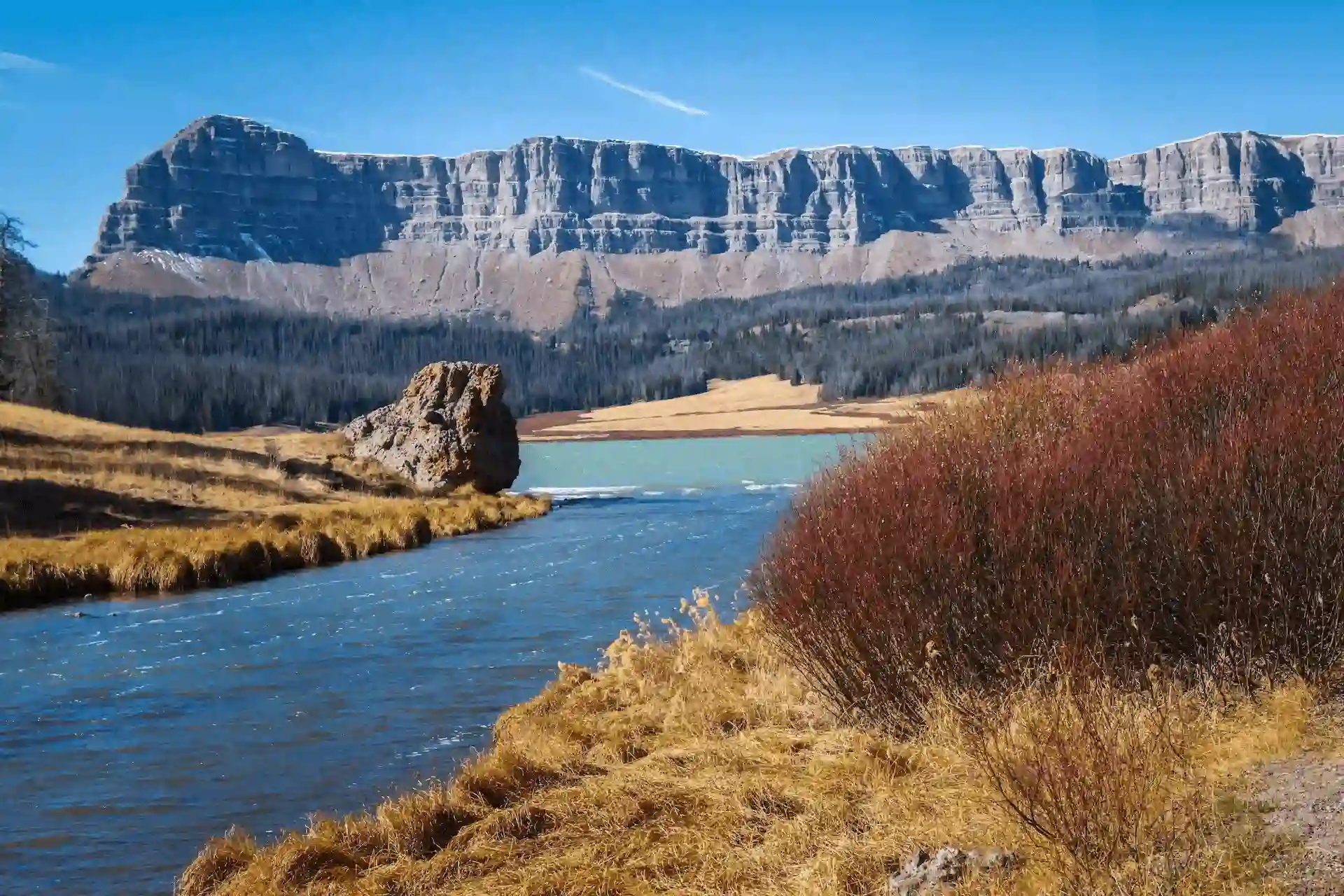

Photos courtesy of the University of Wyoming
Wyoming evokes images of Yellowstone National Park and its 2.2 million acres of geysers and natural hot springs, with bison, bear, moose, elk, grey wolves, mountain lions, bald eagles, and countless other mammals, birds, reptiles, and aquatic creatures inhabiting the land and water. Adventure and leisure seekers alike are sated by the abundance of hiking, biking, horseback riding, backcountry camping, swimming, boating, fishing, and mountain climbing. Dreamlike tableaus await hobbyist and professional photographers; dude ranches await the bold; and boutique lodges await those who prefer their adventures capped by pampering.
Another mainstay of the western state, Grand Teton National Park, headquartered in the aptly-named community of Moose, Wyoming, tempts visitors from around the world to pursue craggy trails with dense tree cover and dizzying elevations, in which cell-phone signals disappear. Visitors during warmer months can plunge into chilly alpine lakes, traverse meadows rocketing rainbows of flowers, and revel at steep waterfalls splattering into rocky canyons. During winter, visitors can find plentiful skiing, snowshoeing, snowmobiling, and perhaps even create a snow angel or two. Wyoming winters are formidable, and the fortitude of the plants and animals that have adapted over millennia to survive and thrive in the climate and elevation is remarkable.
University of Wyoming Libraries supports the National Park Service Library in Grand Teton National Park, housing and managing a “…collection of materials specific to the zoology, botany, and geology of Grand Teton National Park and the Greater Yellowstone ecosystem.” The tiny library exists to support researchers and scientists working at the AMK Ranch field station, approximately 400 miles northwest of UW Libraries’ Coe Library in Laramie, located on the campus of the only public, four-year university in the state.
You read that correctly: University of Wyoming is the only public, four-year university in the entire state of Wyoming.
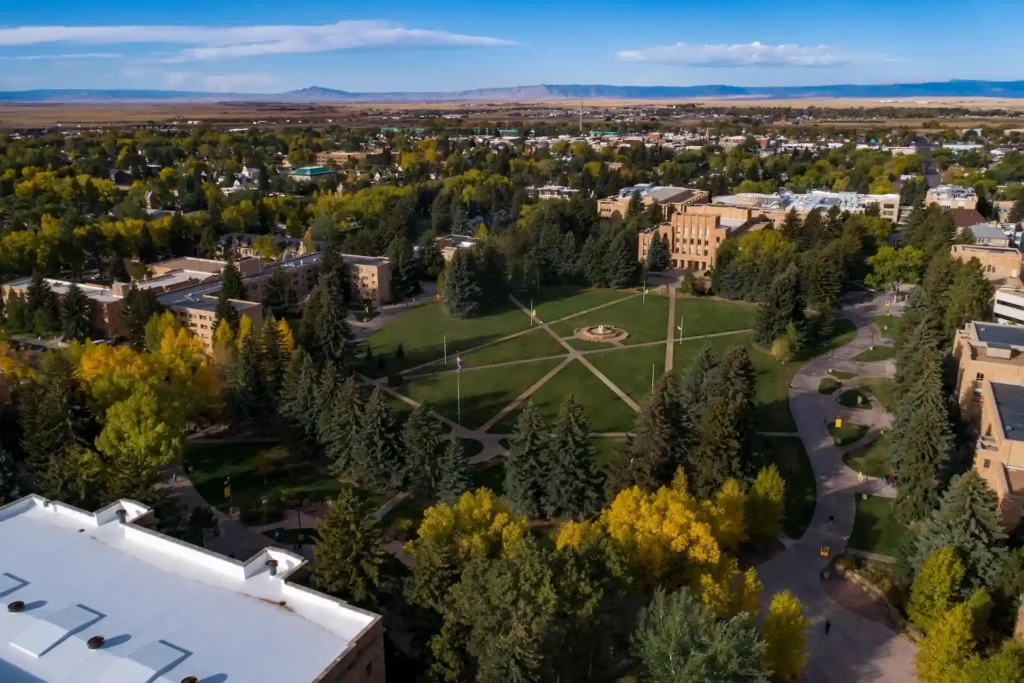
Photo courtesy of the University of Wyoming
Established in 1886, University of Wyoming has almost 11,000 enrolled students and offers over 200 programs of study. The university recently achieved Research Level 1 status, placing it alongside the top research universities in the United States. Showing the breadth of its teaching talents, it also boasts a powerful athletics program, with a football team ranked NCAA Division 1 FBS playing in an outdoor stadium that, at 7,220 feet above sea level, is the highest in the nation.
Laramie, Wyoming is home to University of Wyoming, in the southeast corner of the state approximately one hour from its capital city of Cheyenne. With a population of 33,000 residents, Laramie sees the Snow Range Mountains (“Snowies”) as backdrop thirty-five miles to the west. Snowfalls total four feet annually in Laramie and winters last longer than in most states, but all of that snow and chilly air glitters in Wyoming’s over 230 sunny days each year.
East of Laramie by twenty miles is Vedauwoo (pronounced “vee-davoo”), a marvel of ancient granite outcroppings that look as if mischievous giants stacked enormous piles of pink-hued rocks and then left the scene. The Vedauwoo recreation area is favored by rock climbers as well as day-trippers and picnickers seeking breathtaking views.

Photo courtesy of the University of Wyoming
Coined “Gem City of the Plains” by a local newspaper in the late 1800s due to the boundless potential for growth and prosperity in the striking, expansive land of Laramie, locals today call it “Laradise.” The atmosphere is small-town with big-time presence of cultural, educational, and recreational happenings. Laramie is also a winner of the Great American Main Street Awards for its appealing revitalization and continued growth.
As for gastronomy, take your pick from hearty fare to elegant delicacies, but whether the main course is chicken-fried steak or flaky filet of trout, don’t miss a slice of rhubarb pie for dessert. The tart vegetable grows plentifully in Wyoming and home cooks to master chefs pair it with strawberries, blueberries, peaches, and countless other sweets, baking it all into unforgettable pies. Those pies can be topped with another regional favorite: a scoop of wild huckleberry ice cream.
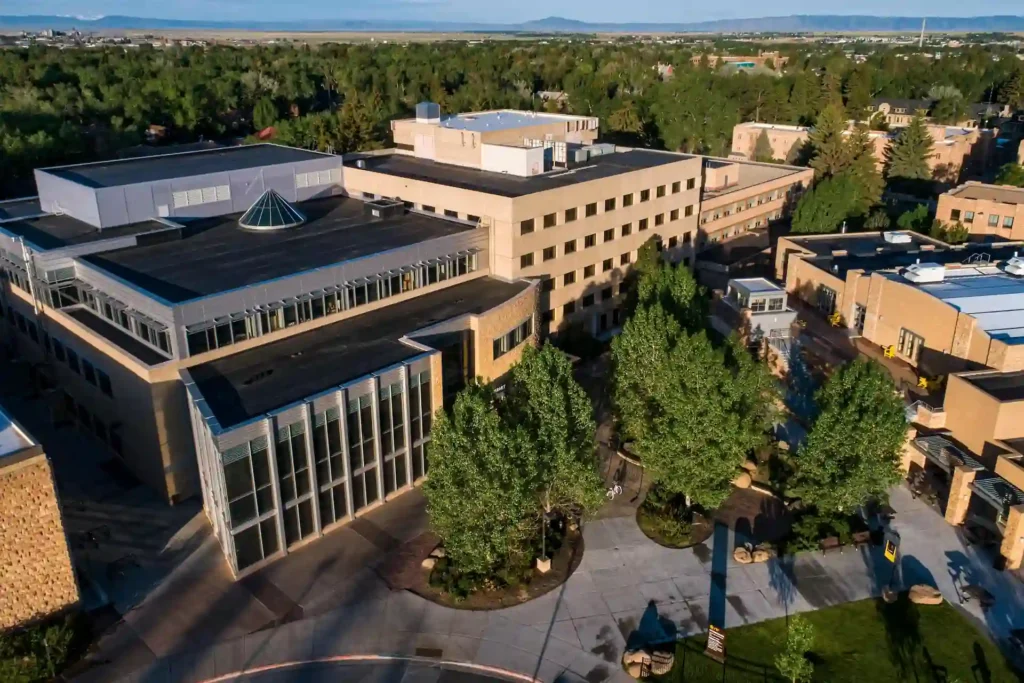
Photo courtesy of the University of Wyoming
Jamie Markus is Associate Dean of Collections at University of Wyoming Libraries, a role he began after eighteen years at the Wyoming State Library, the last seven of which he served as State Librarian.
“The University of Wyoming is the only four-year institution in the great state of Wyoming,” he explains. “We have eight community colleges in the state, but there’s only one university in a state with a population of about 590,000 people. This means that we’re both the flagship and the land-grant institution all rolled into one.”
The inherent responsibility of being the only public, four-year university in an entire state is taken seriously by Markus and his team. The library offers over one-hundred databases, plus other resources, to every Wyoming resident with a library card, and the databases are accessible from home as well as from inside of a library branch.
“We’re particularly proud of that in terms of our resource sharing,” Markus says. “Of course, they’re also welcome to come in and use any of our materials here, and get a borrower’s card and check them out.”

Photo courtesy of the University of Wyoming
The William Robertson Coe Library in Laramie is the main library, and two separate renovations in the decades since its opening in 1957 have made it the largest library in the state of Wyoming. In addition to the main location, the library operates four branches with unique services; one is the aforementioned research station in Grand Teton National Park. Back on campus in Laramie, the library also facilitates the Rocky Mountain Herbarium library and the Brinkerhoff Geology Library.
Being responsive to the needs of running the only public university library system in the state of Wyoming requires diligence from Markus and his team to manage operations efficiently and with an eye to the future. A key way to be forward-thinking and technologically savvy in libraries is to implement RFID.
“We went to RFID because we wanted to inventory our two-million items, and in quicker fashion, quite frankly,” Markus shares. “We used students and staff to do our last inventory and it took about five years to complete, and we wanted to be able to do inventory on a more regular basis. We also wanted to update our self-checkout machines and be able to know what was going in and out of our buildings by using RFID technology, so that we could capture better statistics and use-patterns. And we’re also looking towards the future: unmanned branches, possibly, and lockers where folks can do after-hours pickups and dropoffs.”
While the library has not yet implemented those solutions, they want to be prepared in case they take that route in order to increase patron access. Already using Bibliotheca security gates and selfChecks, the library upgraded those and added a third new selfCheck to another branch as part of the conversion to RFID.

Photo courtesy of the University of Wyoming
“Bibliotheca is a known company for us,” Markus says. “We have a very long history of working with Bibliotheca, it’s a trusted source. We have a great working relationship with our rep; we’ve known him for a long time in various capacities, and he supported other libraries that I was well aware of. So, he was a known entity when we were looking into this, and we had trust built-up in our relationship. Although we could buy from anybody, it was wonderful to work with the Bibliotheca team.”
To convert a collection size of two-million items to RFID in six locations, Markus and his team decided to outsource the tagging. “We used a third-party vendor, Iron Mountain, to do the actual tagging for us. I sat in the middle between our good friends at Bibliotheca providing the equipment side of things and the tag side of things, with Iron Mountain doing the actual tagging, and I could be on the ground organizing and making sure that I could make it as easy as possible for the tagging teams to keep moving forward. It took six months of planning and nine months to implement.”
Markus explained that, during the project, they encountered “…some troubles like anybody else doing any technology implementation. But Bibliotheca was really quick to help us figure out a fix and then I’d send a team to implement that fix. When people do their darndest to communicate, it all works itself out without angst.”
Since the library is a longtime user of Bibliotheca technology, library staff were not hesitant about RFID, “…they were more hesitant about putting tags in two-million books. Would we be done in time? What was the value-add?” Training from Bibliotheca Academy experts alleviated those concerns.
“The trainers are wonderful, really amazing. Our folks who had the training on carts, and watched the video, felt it finally it click. That was what sold the team: seeing the training on how it would all work. That gave them an answer to the “why” we were doing this, and from a different perspective than even we in library administration could articulate. The trainers did it in a way that our team could understand.”
“Our number one suggestion for libraries is to take the training as early as possible,” Markus shares. “Hearing them train on how to use the tagging carts made us pivot on the outsourced workflow, once we fully understood how the carts worked. We knew in theory, but until the training, we didn’t know. And then we made some immediate pivots that we could have made a little earlier that made workflow so much better. So, our number one recommendation would be to take that training early, maybe watch it again right before you start the project.”
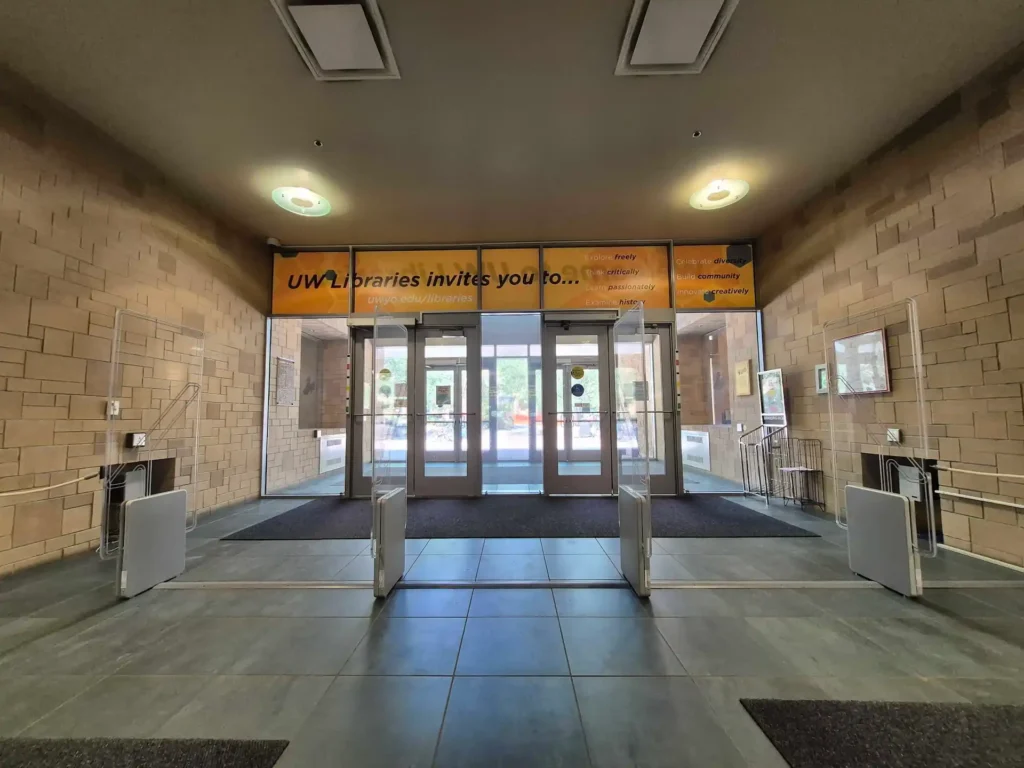
Photo courtesy of the University of Wyoming
As is the case in many universities, University of Wyoming has an entirely separate Information Technology unit that manages processes, security protocols, and permissions for the entire university, including the library.
“In order to interface with security gates, or staff pads, or the software, or, really, to install anything on a computer, we had to work with IT,” Markus explains. “That took a lot of pre-planning, and it worked out just fine. We put Bibliotheca techs into the same virtual room with the IT techs here on campus, and they worked out what they normally have to work out. And I will say that Bibliotheca was incredibly flexible on timing, because we know the calendars never, ever align, and we’re not all in the same time zone. Bibliotheca folks were truly wonderful with the tech help and trying to make things work in a very lockdown level situation.”
Markus and his team wrote a report on their RFID project that they hope other libraries will find useful as a planning guide. “It’s about the process of how you design your implementation, whether or not you’re using third-party outsourcing,” Markus says. “The focus is less on the technology and more on the activity surrounding actual tagging. We talk about how we kept our library open during the conversion, and how we created overlapping teams. For example, we had a team who could rapidly respond to any questions from our tagging vendor about the collection: whatever they ran into, we had a team that could make a decision immediately.”
There has been a great deal of interest in the University of Wyoming Libraries’ RFID project, and Markus recently presented on it at the Greater Western Library Alliance.
“We’re part of a group called the Colorado Alliance of Research Libraries with all of the research libraries in our two states, which, mind you, is just ours in Wyoming, and the rest are in Colorado,” he shares. “They were here for one of their strategic planning meetings and we gave them a tour of the library. It’s a showpiece, but also helpful, and we had several questions from libraries who had done RFID on a much smaller scale. They were all very interested in why we did it and how we did two-million items at once. We also have the report we wrote on our experience that we hope other libraries will find valuable as a cheat sheet or help guide.”

Photo courtesy of the University of Wyoming
Now that the library has implemented RFID, they look forward to utilizing the inventory wand, and to refreshing the collection in new ways. With the capabilities of the inventory wand and RFID, “…we’ll know what’s not there, along with the things that walk out because people want them, they love them, and so it means we need more copies of them. I don’t like loss. But also, it tells me parts of the collection that are being heavily used in a different way, and we can direct collection development efforts accordingly.”
Markus also anticipates examining gate count statistics through a new lense. “We didn’t have access to some of the stats that we’re looking forward to using. We were able to run those in our integrated library system, but now we can run them in a different way. Such as, how many items are people carrying with them as they’re coming in and out? That sort of thing.”
Reflecting on the RFID project, Markus is appreciative of the dedicated, thoughtful work conducted by all involved parties.
“This was a huge team effort across the libraries,” he says. “When you’re converting two-million items, a lot of communication back and forth is needed. By doing the entire collection and not just one branch, or one floor, or only high-use items, everything is on par. There were a lot of eyeballs on this particular project, and now, things are chugging along. We’re future-proofing. Who knows what the future will bring, but we have options with RFID that we didn’t have before.”
Spread the Word

You may also Like
Insights + Trends
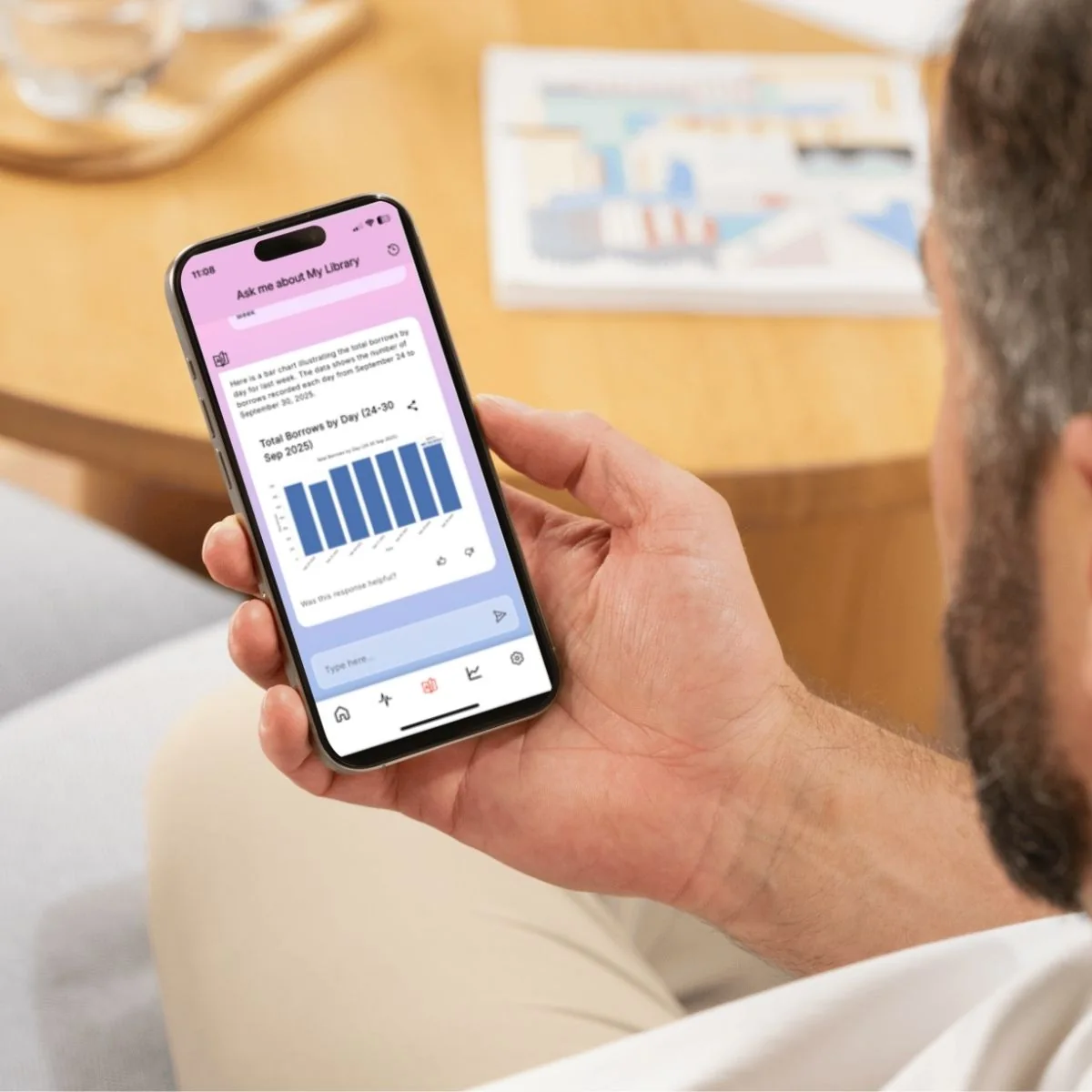
libraryConnect LINK: Managing Devices, Data and Support in One Place
See how libraryConnect LINK gives library teams a clearer way to monitor equipment, manage changes, troubleshoot issues, and use operational data.
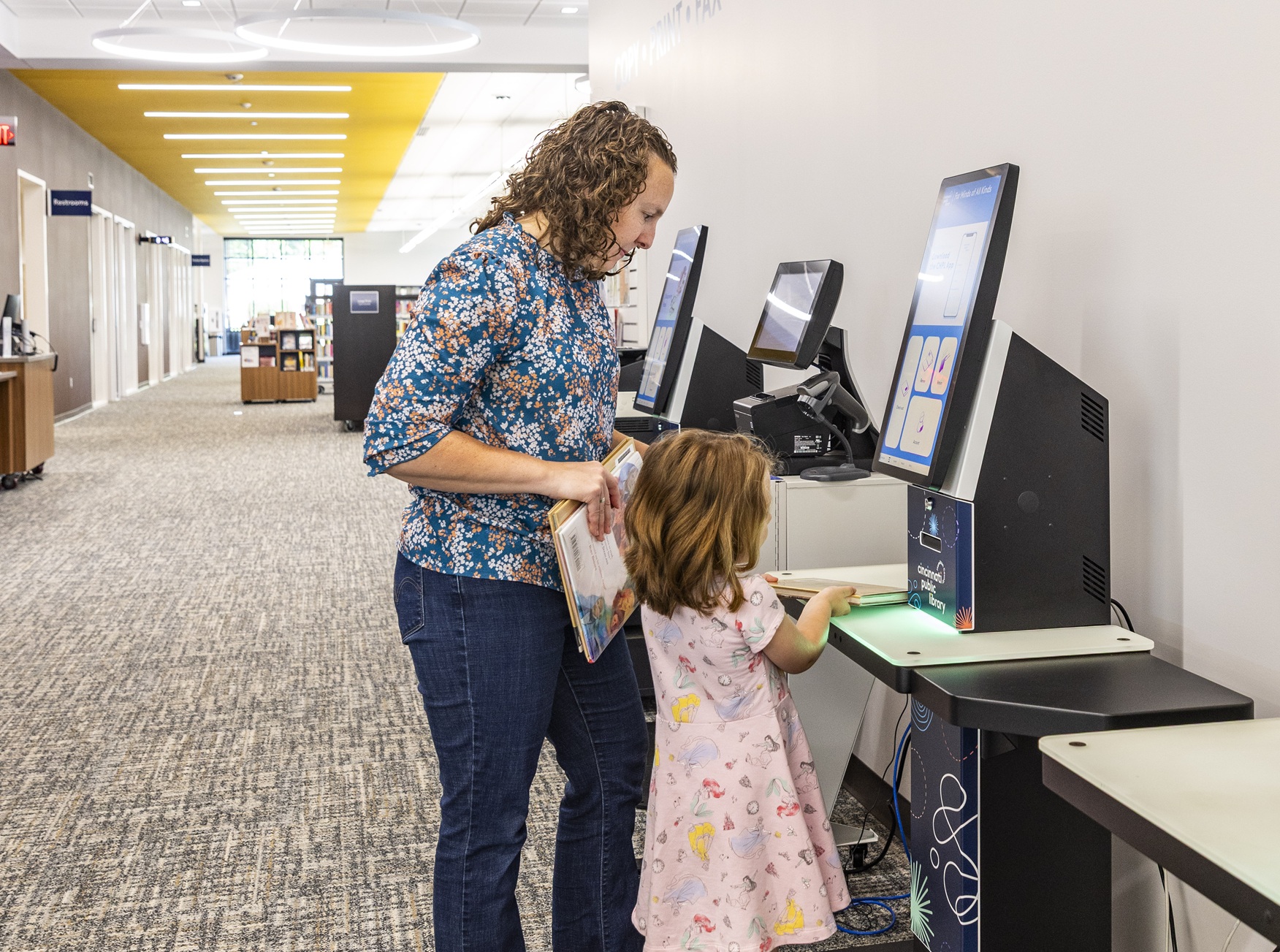
RFID in Libraries: What It Is and What It Changes
Learn what RFID tags contain, what it takes to convert a collection, and what libraries should consider for checkout, security, and inventory.

Customer Training | Bibliotheca Academy: Unlocking the Full Potential of your Bibliotheca Products
Discover Bibliotheca Academy, our new Learning Management System designed to help library teams access training, build product knowledge, and get more from their Bibliotheca solutions.