



Challenge

Solution

Result
By Lisa Stamm, MLS
Sr. Solution Consultant · Master of Library Science
The city of Brighton, Michigan is swimming in nature. With nearly five-thousand acres designated as recreation area encompassing nine lakes and thirty-five miles of connected trails, the lush land offers countless opportunities for outdoor pastimes. The terrain ranges from flat marsh to hilly vista, replete with open green spaces, shimmering lakes, and blankets of trees. Among the seemingly limitless options for leisure and exercise are horseback riding, offroad biking, hiking, boating, paddle-boating, fishing, and camping at three distinct campgrounds described as modern, rustic, or equestrian-only with “horse required.”

Photos courtesy of the City of Brighton.
While the expansive recreation area is undeniably a haven to commune with nature, be it by lolling on a warm, sandy beach, leaf peeping the turning ochres and carnelians, or sledding snow-packed hills, residents and visitors know that, less than three miles away, downtown Brighton welcomes all to refuel their bodies and unhurriedly explore its eclectic locally-owned shops and restaurants.
The small city delights in gastronomy, with specialty food markets and cuisine ranging from coconut curry to chicken pot pie, Michigan blueberry salads to cured meat and cheese plates, half-pound hotdogs to vegan ginger molasses cookies. Sip a craft draft or a latte infused with honey and lavender, and finish the day with a waffle cone filled to the brim with handmade ice cream.

Downtown Brighton also boasts a unique, manmade wonder: three footbridges joined at a central point to form what is colloquially known as a tridge. Adjacent to the tridge is a 10,000 square-foot wooden playground named Imagination Station. After ambling the nearby half-mile boardwalk along Mill Pond, locals and visitors can enjoy nearly thirty outdoor sculptures created by Midwest artists and installed throughout the city. With names such as “City with a Halo,” “The Shape of Home,” and “It’s a Keeper,” it’s clear that hometown pride is abundant.

“The Shape of Home” by Kelly O’Neill. Photo courtesy of the City of Brighton.
Following along those lines, a few years ago, a group of Brighton business owners adopted a tagline slightly modified from the title of an article written by the Brighton Area Historical Society and published in the town newspaper in the early 1900s; the title read, Every Good Citizen Should Buy, Build, Believe in Brighton. Those local business owners now operate a collective called Believe in Brighton, its purpose being to support and promote downtown events and commerce, thereby carrying on the ethos and encouragement of the original newspaper article that residents should invest in their community.

And invest in their community, they do, as evidenced by prominent support and patronage of their local public library. So much so, that Brighton District Library recently unveiled brand-new, outdoor remoteLockers that were partially funded by donations made by the Brighton community. Along with the lockers, the library has made technological upgrades with the sole purpose of improving patron access to resources and enhancing the library experience as a whole.

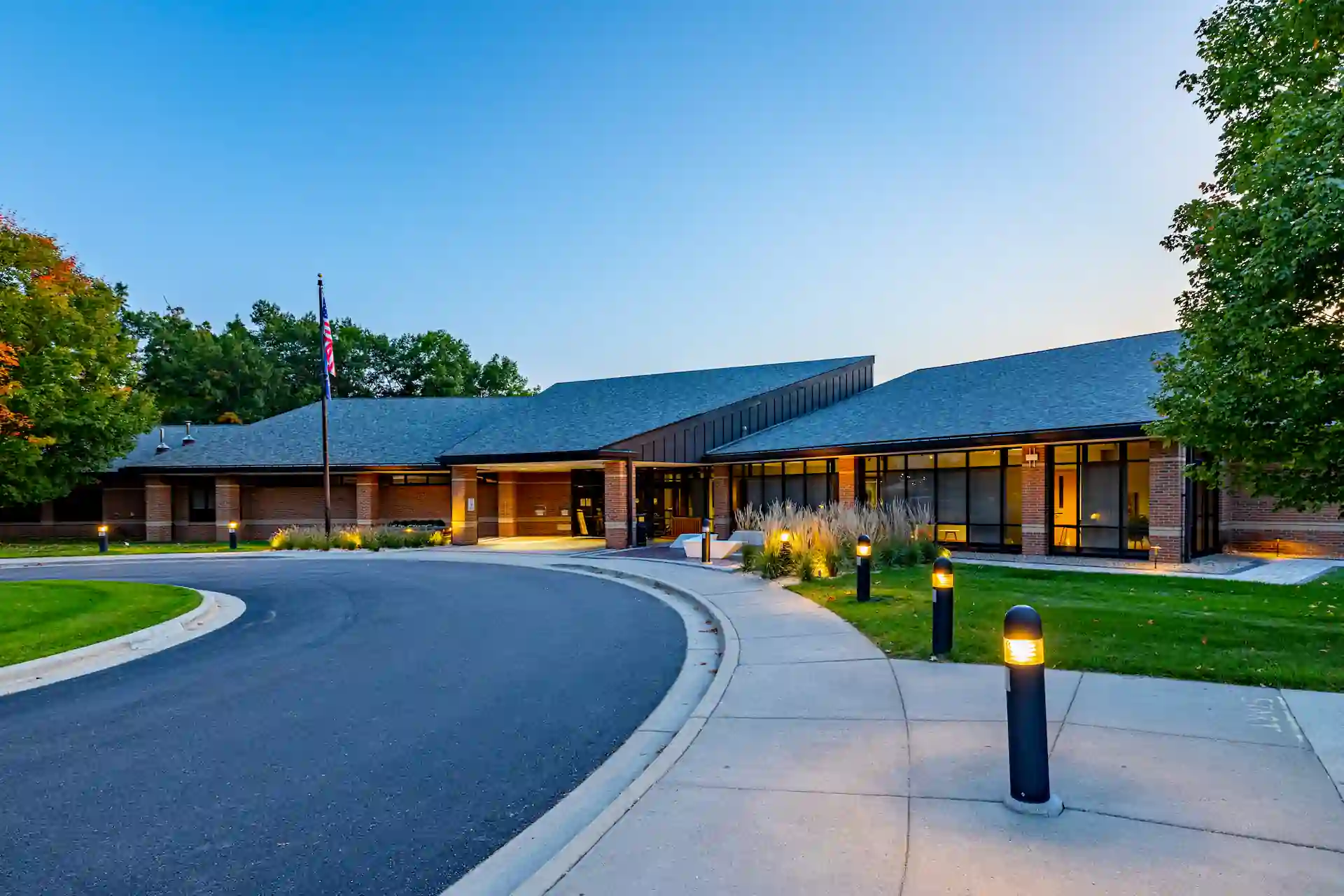
“Brighton District Library serves approximately 46,000 people in the outlying suburbs of metro Detroit,” says Cindy Mack, Library Director. “We are fairly evenly distanced from Detroit, Lansing, Flint, and Ann Arbor; all are within an hour’s drive. We have a huge commuter population and that’s significant for us and drives many of the decisions that we make, from maintaining our digital collections to adopting new technologies such as locker systems. We have a lot of patrons who spend a lot of time on the freeway, and when five o’clock hits, they worry that they won’t be able to check out a book they’ve been waiting for, or a hold that’s ready for their child. But now, we’ll put their materials in our lockers for them to pick up at their convenience. Those are the types of resources that we think about, the ones that help us answer, ‘how do we best serve our community?’”
The population of Brighton is comprised of many young families alongside a hearty number of retirees, creating an interesting dynamic in the small community.
“We have a lot of highly educated business professionals who are commuting,” says Mack, “also have families with children, and a strong retiree population, and they all use our library services. We think carefully about these populations and how to best serve them; there’s some overlap, but in many ways they are significantly different. We try to balance those differences to create an environment where everyone’s going to find something of value and feel that we’re addressing their needs. That’s our biggest goal: how do we make it easy to use the library?”
Brighton District Library offers a wide array of resources coupled with stimulating programs for all ages, and the community responds with high library use and high program attendance, such as the nearly 500 people who attended a recent outdoor foam party. Not only that, but an outsized amount (for such a small city) of local businesses regularly and proudly sponsor summer reading and other library initiatives.
“We want to be a community destination,” Mack shares, “and we try to have a lot of programming that encourages people to find our library and feel comfortable using our library. Hopefully from there, they’ll connect with our resources…maybe discover a new book that they want to check out, or discover the technology available to them in our Inspo-lab. We believe in lifelong learning, and we believe that learning can be fun. We believe that healthy family dynamics and family time together, when parents and their kids are laughing just because there’s foam everywhere, are important, so we do a lot of programming to encourage community and to encourage relationships.”
Mack emphasizes that the goal of the library is to make life easy for patrons, especially in the current economy, and to make it possible for patrons to find activities and materials to enjoy at no cost. Brighton District Library’s Learning Journey pathway is a perfect example of the library as destination and space for creativity, musing, and serenity among nature.

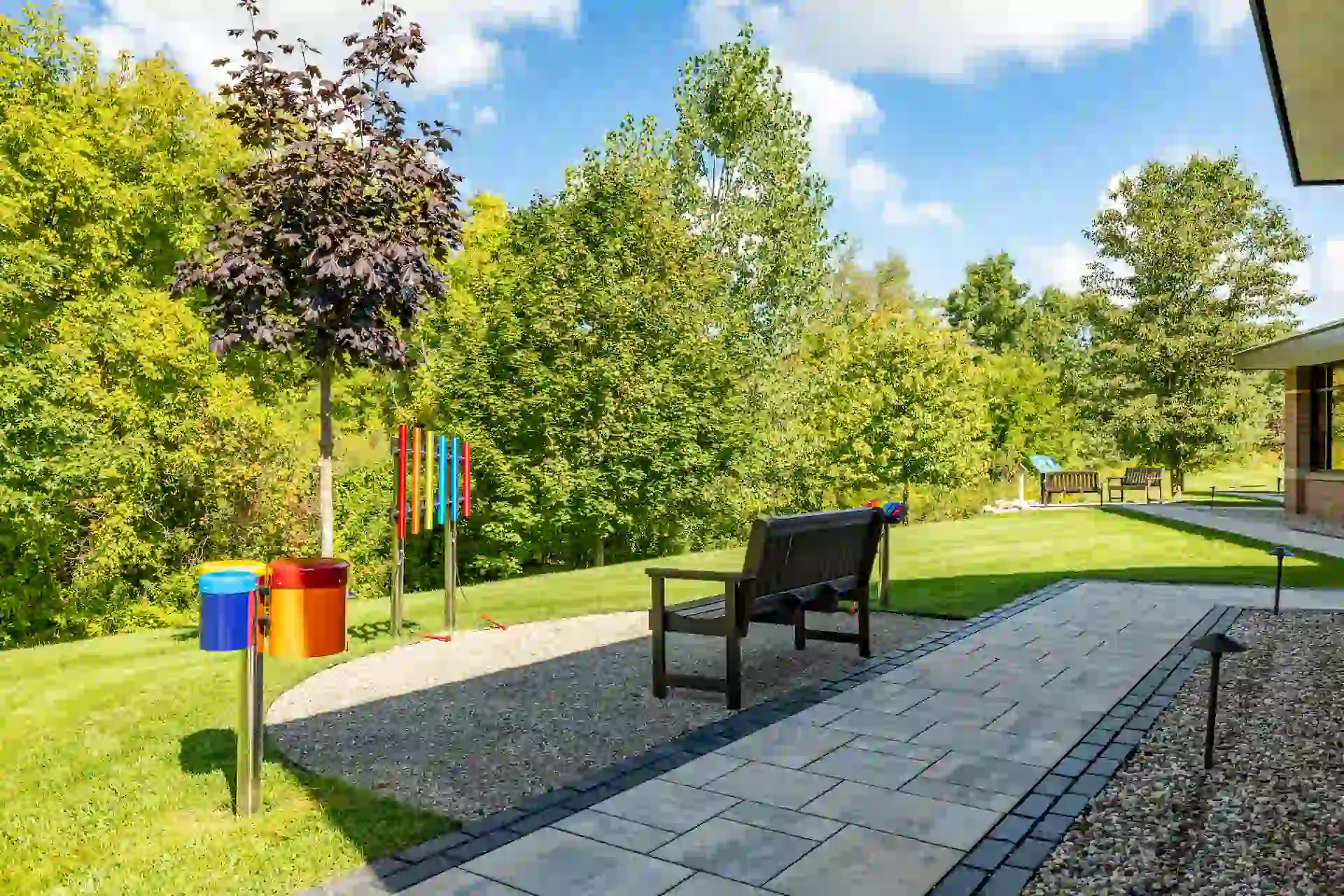
The Learning Journey is an “interactive, educational pathway,” featuring musical instruments and “learning nooks” with guideposts about animals, insects, and habitats, along with a children’s playhouse, an outdoor pavilion with seating, and an observation spot to view the Parker Preserve, 4.5-acres of protected lands gifted to the library by the Parker Families with the intent that the area remain intact for today’s community and for future generations. Again showing the Brighton community’s dedication to its library, the many components and maintenance of its outdoor spaces are supported in part by the Friends of the Brighton District Library, the Livingston Land Conservancy, and the Brighton Garden Club.
“The Learning Journey is meant to be a place that people can come to for a moment of rest and relaxation, or bring their kids for a picnic and to run around,” Mack says. “We’re very fortunate that we are on 10 acres; our building itself is on six acres, and we were gifted four acres. The library is at the edge of town, and we’re lucky to have this large-scale outdoor space.”

“Our facility is about 23,000 square feet,” she continues, “and our population is growing, so we have to consider the long-term. We found ways with a renovation we completed in 2019 to create flexible spaces to make it easy for patrons. We have a quasi-one point of service desk, similar to information commons in universities, where we have a librarian and a clerk working right next to each other. That helps with space and also creates ease of use for patrons, because the clerk can help with basic services, but what happens half the time? The patron needs more in-depth assistance, but we don’t tell the patron, ‘you have to go talk to the librarian over there,’ we say, ‘the librarian is right here.’”
“We’ve found it successful to have the kind of service desk where we’re not expecting the patron to move to find the services, we’re going to connect the right staff member with the patron right then and there. That’s our goal, to create an environment that’s very easy to use, and even our self-checkouts are at that one point of service location.”
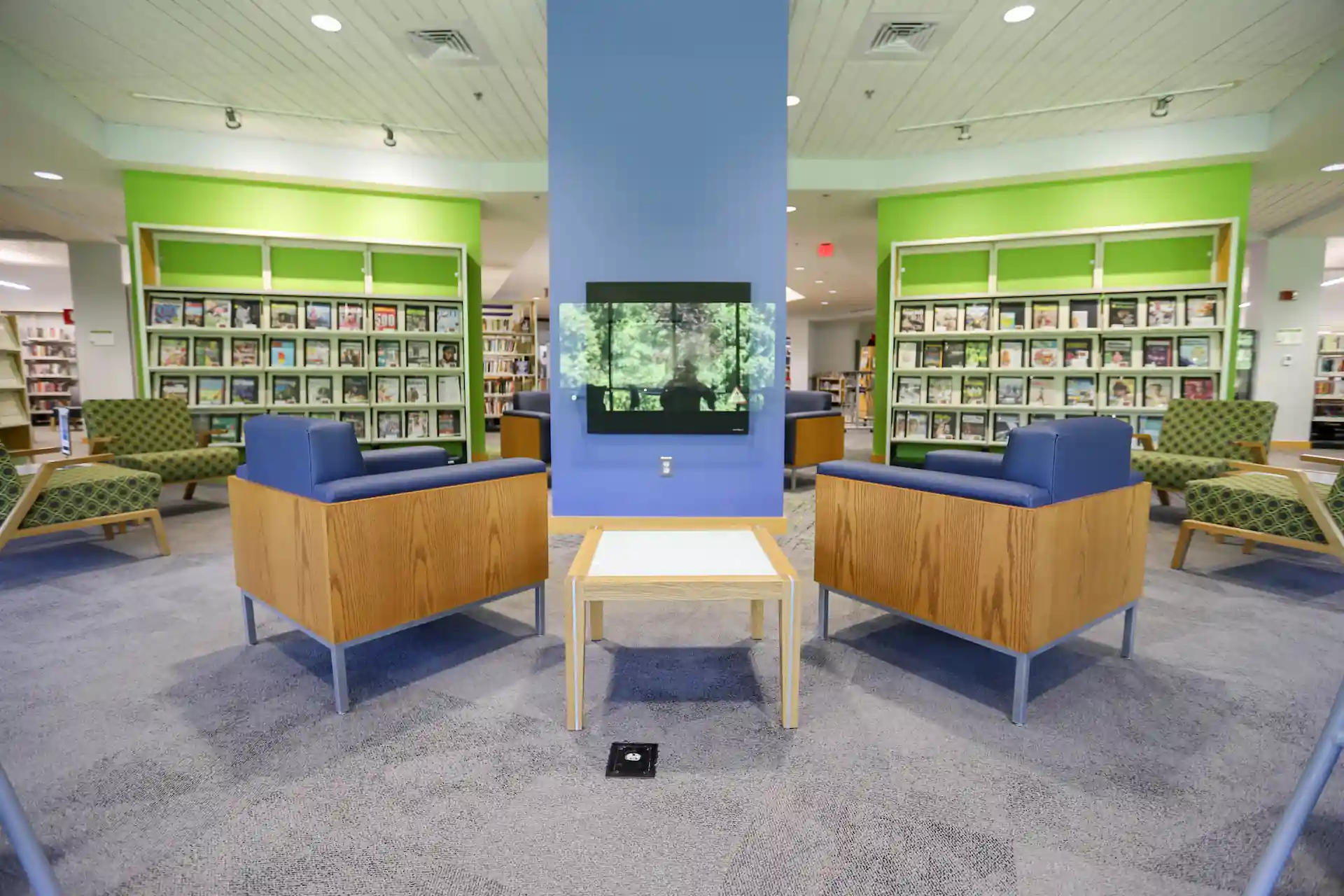

Brighton District Library decided to implement RFID after its library cooperative announced that it was transitioning to a system that uses RFID tags for interlibrary loans, and required member libraries to tag their own materials.
“RFID was interesting,” Mack explains. “It was in the back of our minds as something we should consider, and we had no RFID solution prior to working with Bibliotheca. The decision of the cooperative opened the door, and we thought, well, if we’re going to be required to convert at least some of the collection with RFID tags, we should investigate implementing RFID into our entire system to get the full benefits of the technology. It was an opportunity to look at efficiency of services and to provide a better experience.”
The library often heard a protest from patrons commonly heard in countless other libraries: that it took too long to discharge materials from patron records. “We also made the decision to go to RFID because one of the main complaints we heard from patrons was that they wanted instant check-in, which then helps with holds, and helps with ensuring that there are no issues with materials returned. Even though we are fine-free, patrons like having a clean record.”
Mack and her team began investigating the options and benefits of RFID technology, and also wondered whether an AMH (automated materials handling) system could work in the small space that they had available in their library.

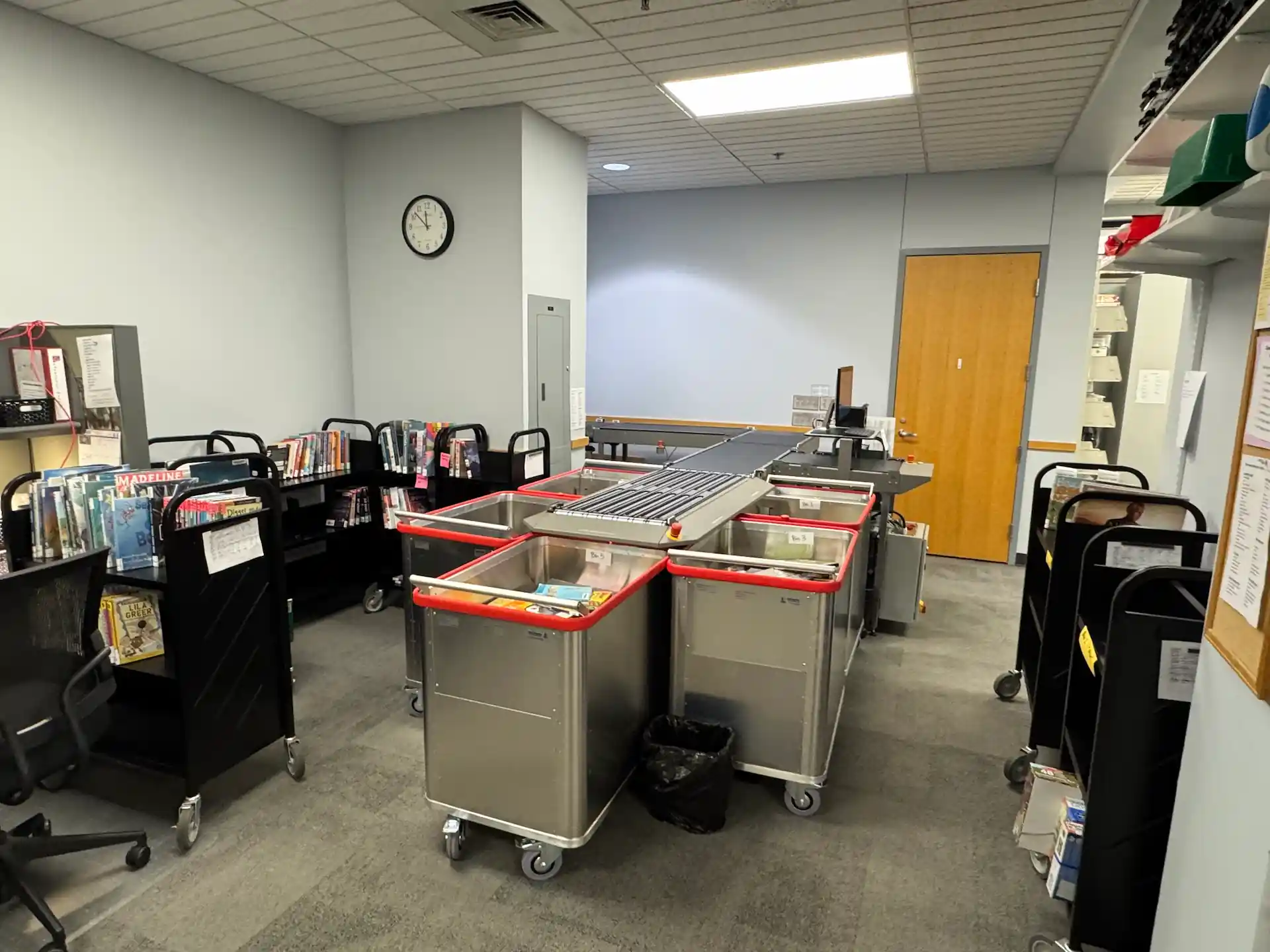
“One of our concerns was, our building was built in 1996 and we did a renovation in 2019, but there’s not a lot of space. We worked with some companies but Bibliotheca was the one that had the smallest AMH handlers, and was the one that seemed to really understand how to make it fit into our space with the most ease. They spent a lot of time looking with us, figuring out the layout and how to best implement it, and we really appreciated that. We have 6-bins and it works for us really, really well and is able to sort our materials in a very efficient manner.”
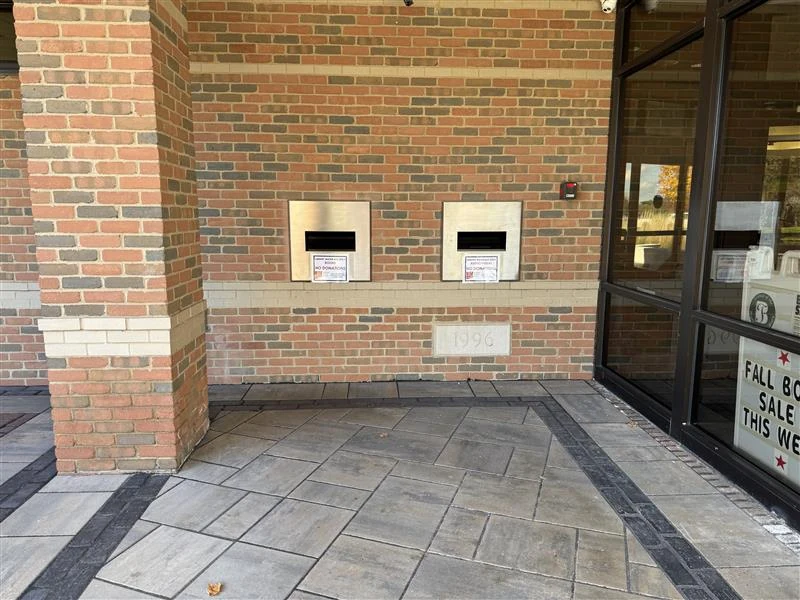
The library included a flex bookDrop induction point to its AMH, to give patrons a way to return materials and have their accounts be instantly updated.
“One of the selling factors for us in the end, though, over anything else, was the flex bookDrop,” Mack shares. “An RFID book drop that automatically checks in materials sold us on the product. Patrons being able to place their returns in a book return slot from the outside of our building and have them be immediately checked in without the need to access the AMH was an amazing concept for us to consider. The flex book drop was what really pushed us over any other vendor.”
Library staff members were initially nervous about the process changes that would come about by implementing RFID and AMH, but Mack and her management team gave staff a safe space to voice their concerns and have productive conversations, and gave them agency to determine the best ways to utilize the new technology.
“When staff are hesitant about things,” Mack says, “you have to allow them to express their hesitation. Staff can go to their department head and express their concern, and the goal is that the department head can take that feedback to us, and we can find ways to address it. I also think that when you have frontline staff who are hesitant, they should be permitted to offer input and help determine new processes. It’s not my job to say how the bins should be sorted, or even what bins should go where. I think the success of what we did, and how there was such ease in adapting to it, is because staff helped make decisions regarding the implementation and how we would work with it.”
The library management team and lead positions in circulation and technical services received training about the new technology from Bibliotheca Academy, and they then trained the department members.
“It was an easy training,” Mack explains, “and now, staff are very happy. Even before we had training, it was so easy to use! There wasn’t a huge learning curve.”

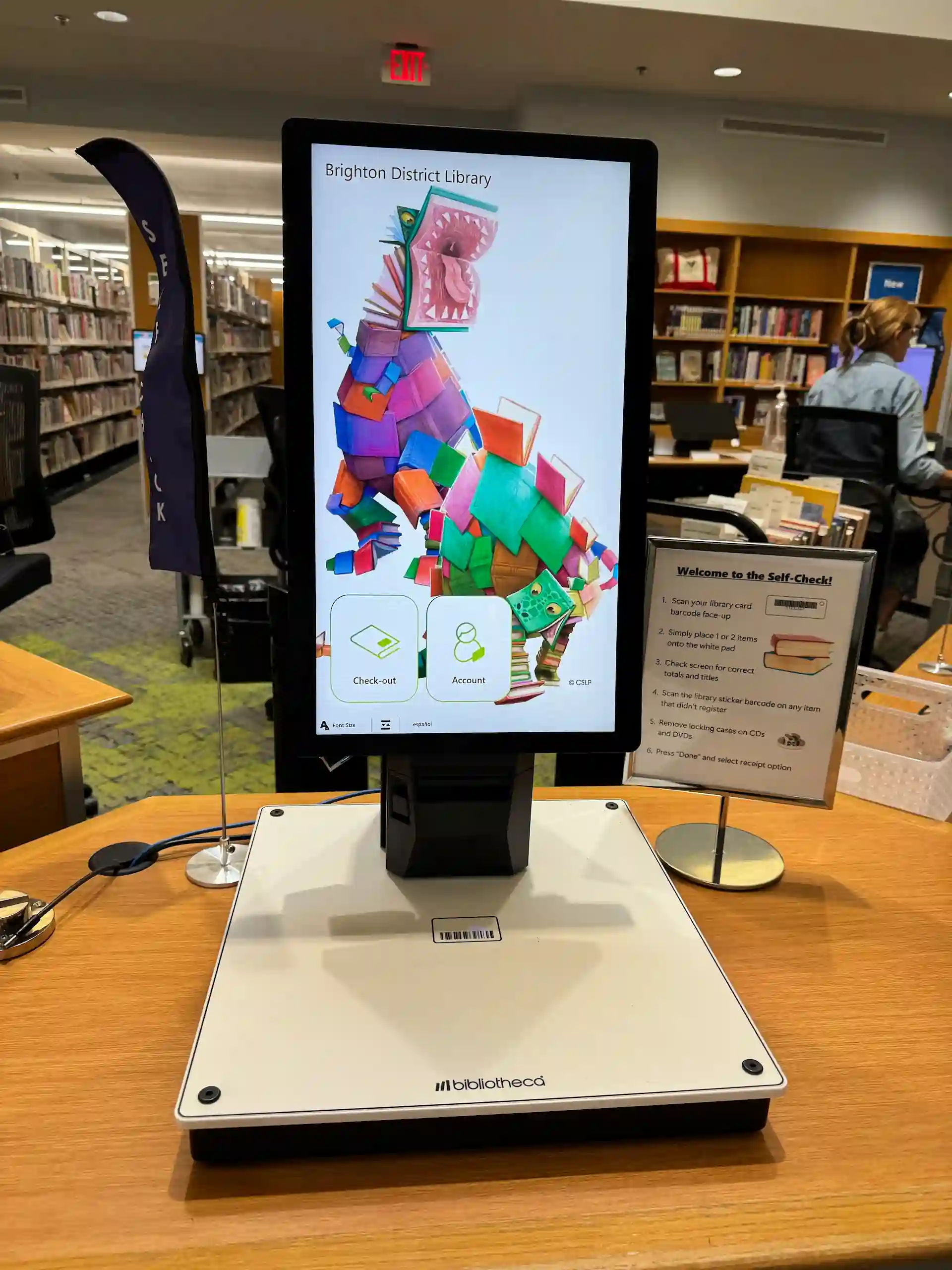
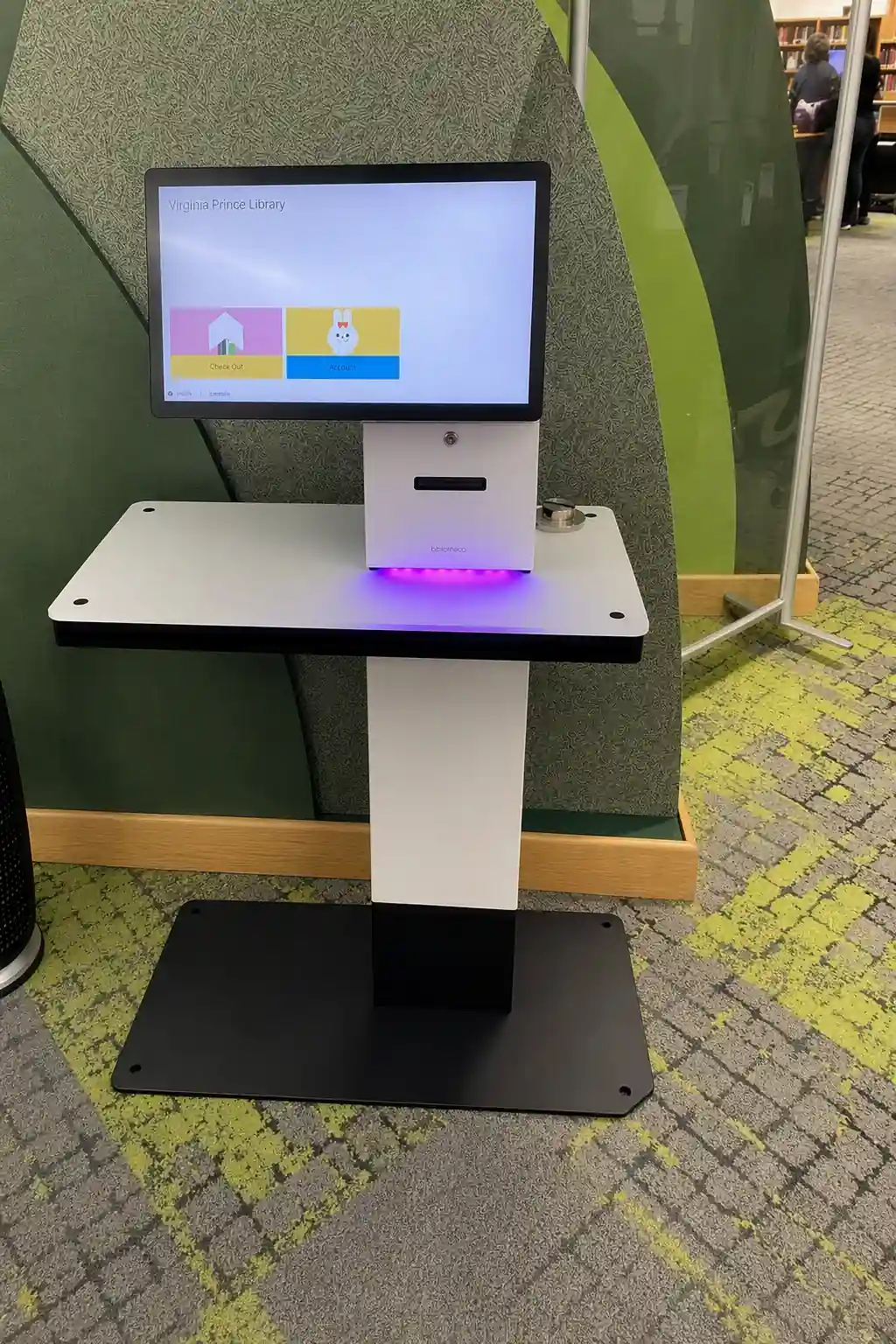
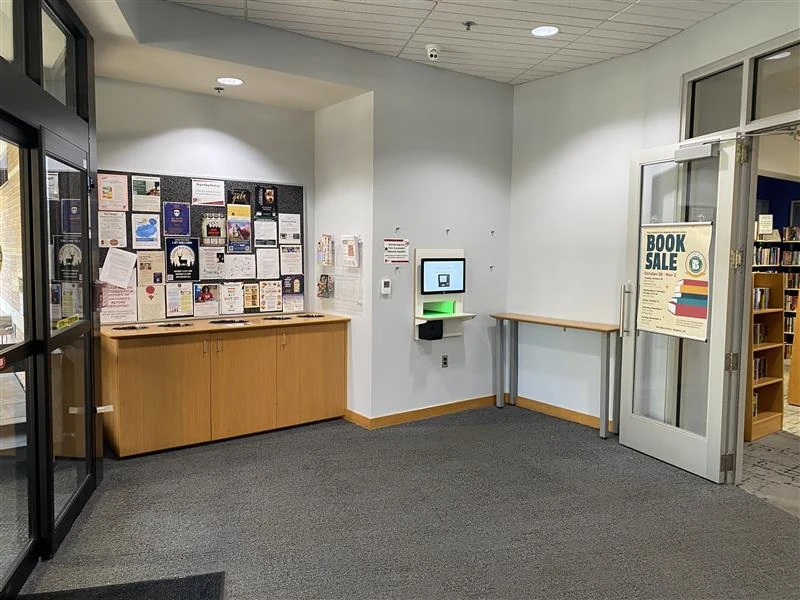
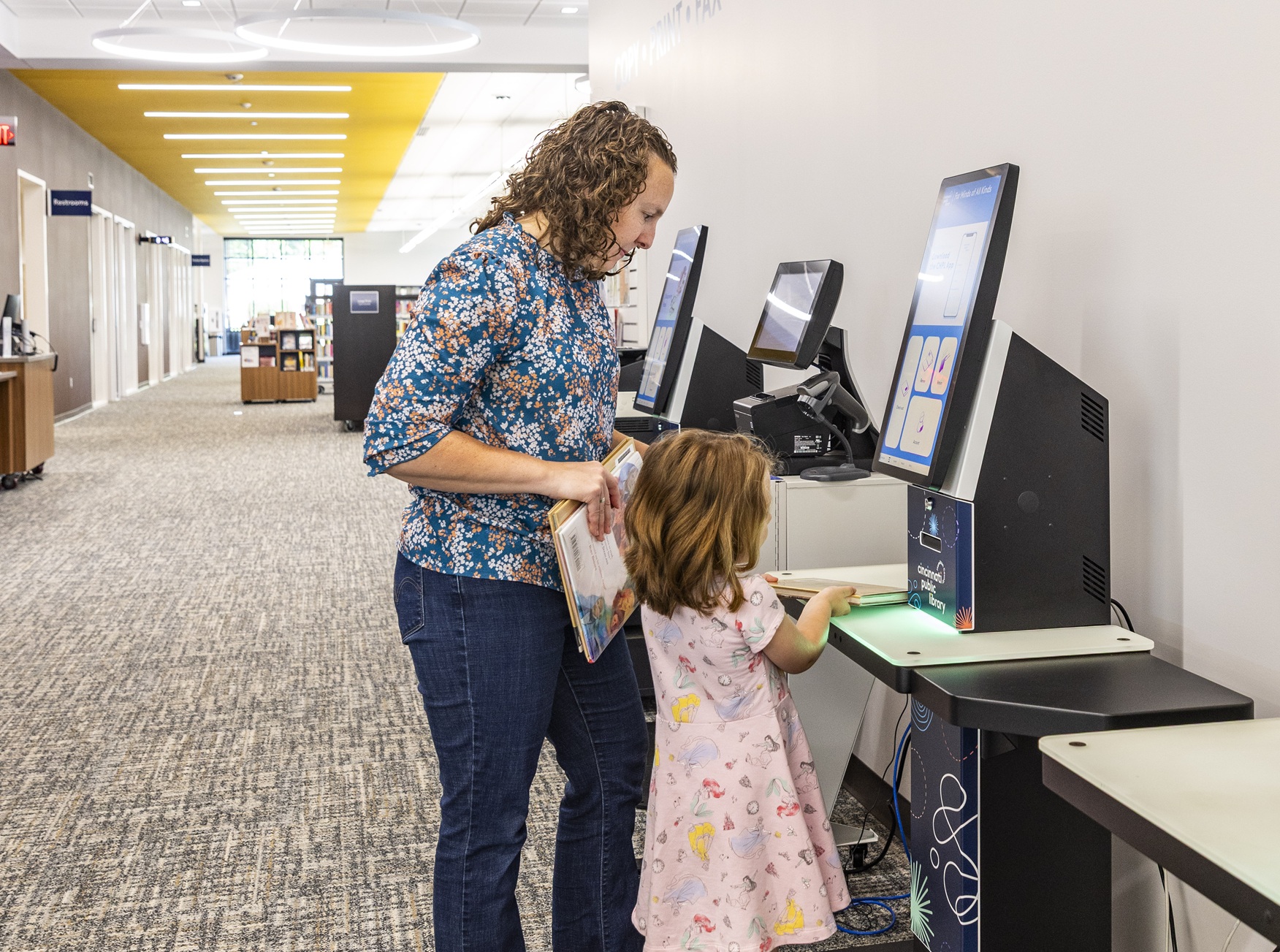
Public response to the Brighton District Library RFID project has been positive. The library added a self-check machine to its youth room, and parents and families enjoy (and heavily use) this self-service option while their children run about.
“The RFID self-checkouts are absolutely wonderful, because they’re quicker, and having instant checkout works out really well,” says Mack. “The youth room self-checkout is adjusted to a lower height where kids are able to access it. And families love to look at the AMH sorter through the little gap when they put their books in, they’re really excited about that. When we have school visits, the highlight is seeing the AMH sorter. We have fun with the technology, and families get a big kick out of it.”
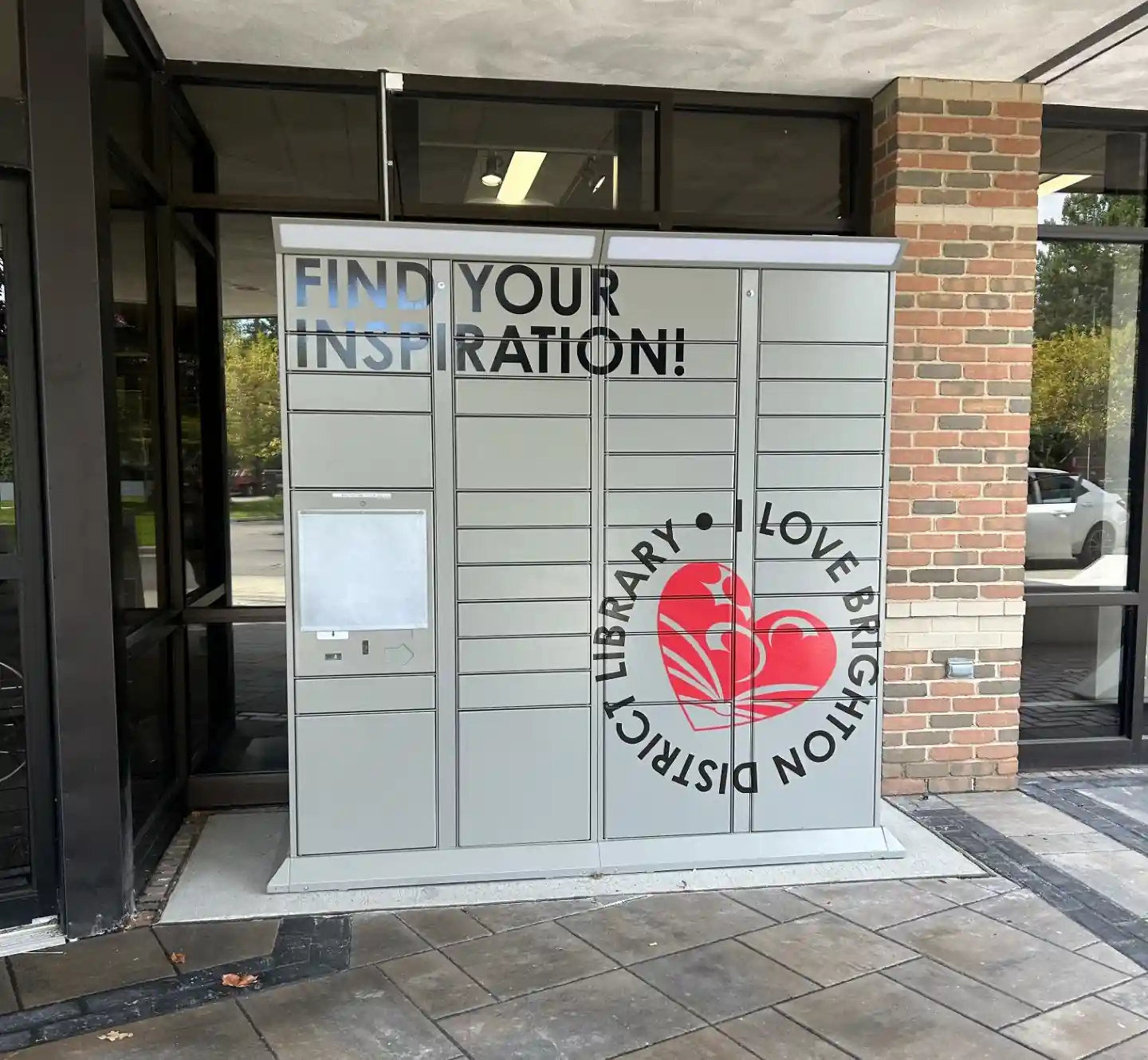
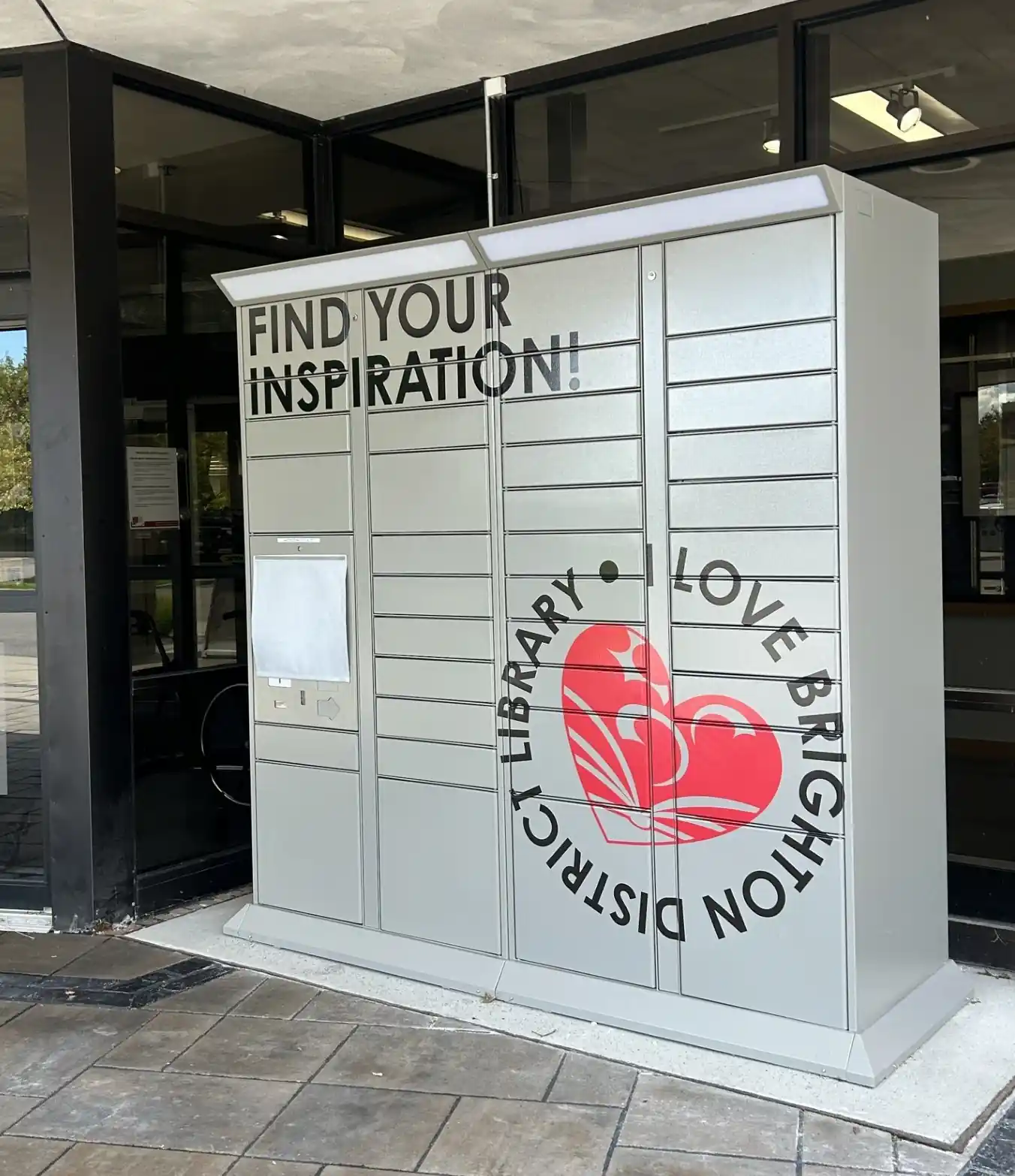
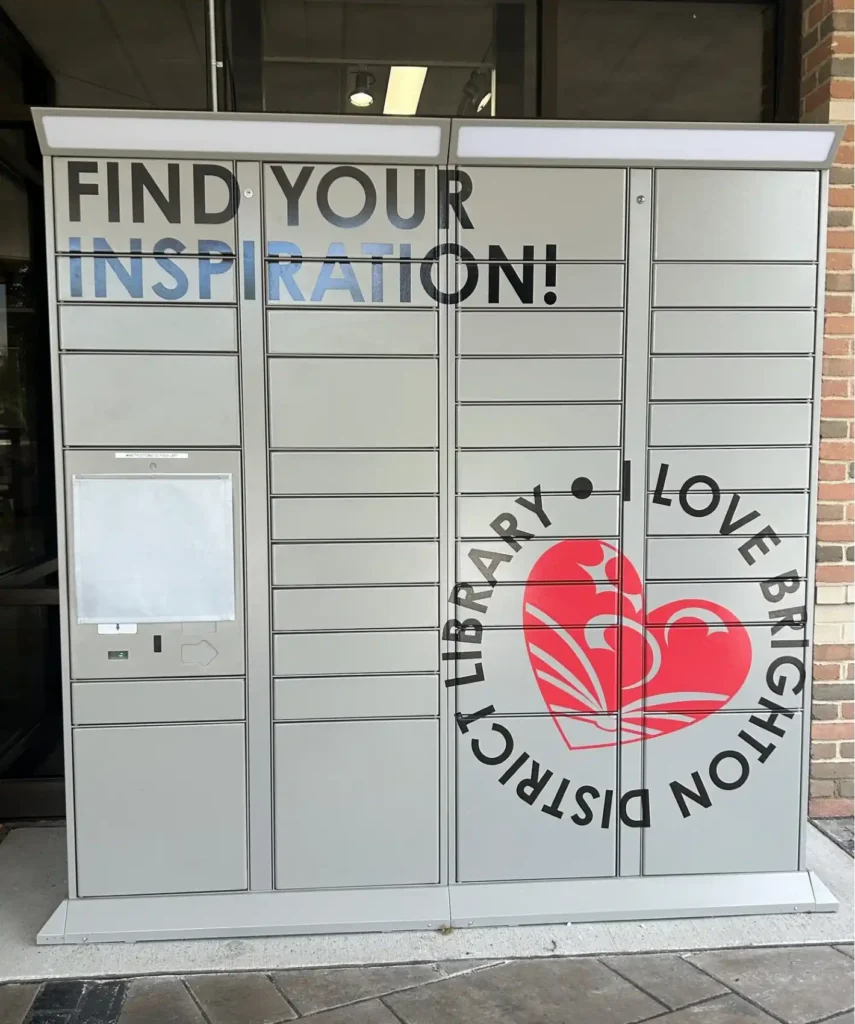
As part of the RFID project, Mack and her team implemented a remoteLocker system outdoors next to the library’s main entrance. The community quickly took to the lockers, even in early stages.
“We have two sets of them,” says Mack, “and on average, we have about half of them full at any given time, and that’s without a lot of promotion, yet. We’re very pleased and our patrons love the new technologies. I think it creates an environment where—as I’ve mentioned, ease of use is important to us—patrons are happy because it’s easy to check out materials, and to access materials when we’re closed, and to return materials and know right away that they’re off their accounts.”
Circulation, self-checkout use, and door counts have all increased in the short time since Brighton District Library implemented RFID and its corresponding technologies.
“Self-checkout increased by 4% and we’d already had self-checkouts, so that shows the ease of use,” Mack shares. “Our circulation increased 3.5% and our door counts increased by 5%. Patron wait time has seen a reduction, and holds turnaround time has been significantly faster. It is advantageous for us and our patrons that our interlibrary loan requests are being filled an entire day earlier than they were before RFID. Obviously, implementing this technology is helping us.”
Brighton District Library’s RFID technologies have caught the attention of other local libraries, who visit to see for themselves how it all works for patrons and staff.
“We had a library visit because they wanted to see the RFID, the self-checkout machines, and the AMH,” she says, “and we showed them the flex bookDrop and they were amazed. What we’ve been able to accomplish with the limitations that we have, especially when it comes to space, has been a pleasant surprise.”
“The best thing about libraries and library professionals is, we want to share everything,” she continues. “We want you to see what we’ve done with technology and copy it, so that it hopefully creates more efficient services for your library. We’re a patron-driven library, and our usage has definitely increased as we continue to adopt new technologies and evolve our services. The things we did with our RFID project were things other libraries had done, and now we’ve been able to adopt them to benefit our community. The success of one library makes us all successful.”


The Brighton community has responded enthusiastically to the technological upgrades made by the library to improve the patron experience, and Mack and her team are equally satisfied with the results.
“What I love about Bibliotheca,” she explains, “is that the technologies are flexible and adaptable to both smaller libraries and bigger systems, so libraries can easily decide what works best for them based on spacing and budget. And I will say: tech support has been great. Bibliotheca is by far the best in the industry when it comes to working with its customers, and we’re very pleased.”


With plentiful services, materials, programs, and indoor and outdoor spaces to educate, entertain, comfort, and stoke the imaginations of patrons and visitors, Brighton District Library takes caring for its community very seriously.
“Customer service is our number one priority at the library,” Mack says. “We’re focused on creating a very welcoming, easy environment for our community. We’re trying to make life easy and fun, but we’re also a resource for people during challenging times. We encourage people, no matter their age, to always learn and grow, because lifelong learning is important to a healthy and successful community, and we’re happy to be part of that.”
SHARE THIS LIBRARY STORY

You may also Like
Insights + Trends

AI for Librarians: Where to Start and 5 Real Use Cases
The skills behind a good reference interview are the same ones that make AI useful. A library director shows how, with five projects you can borrow.
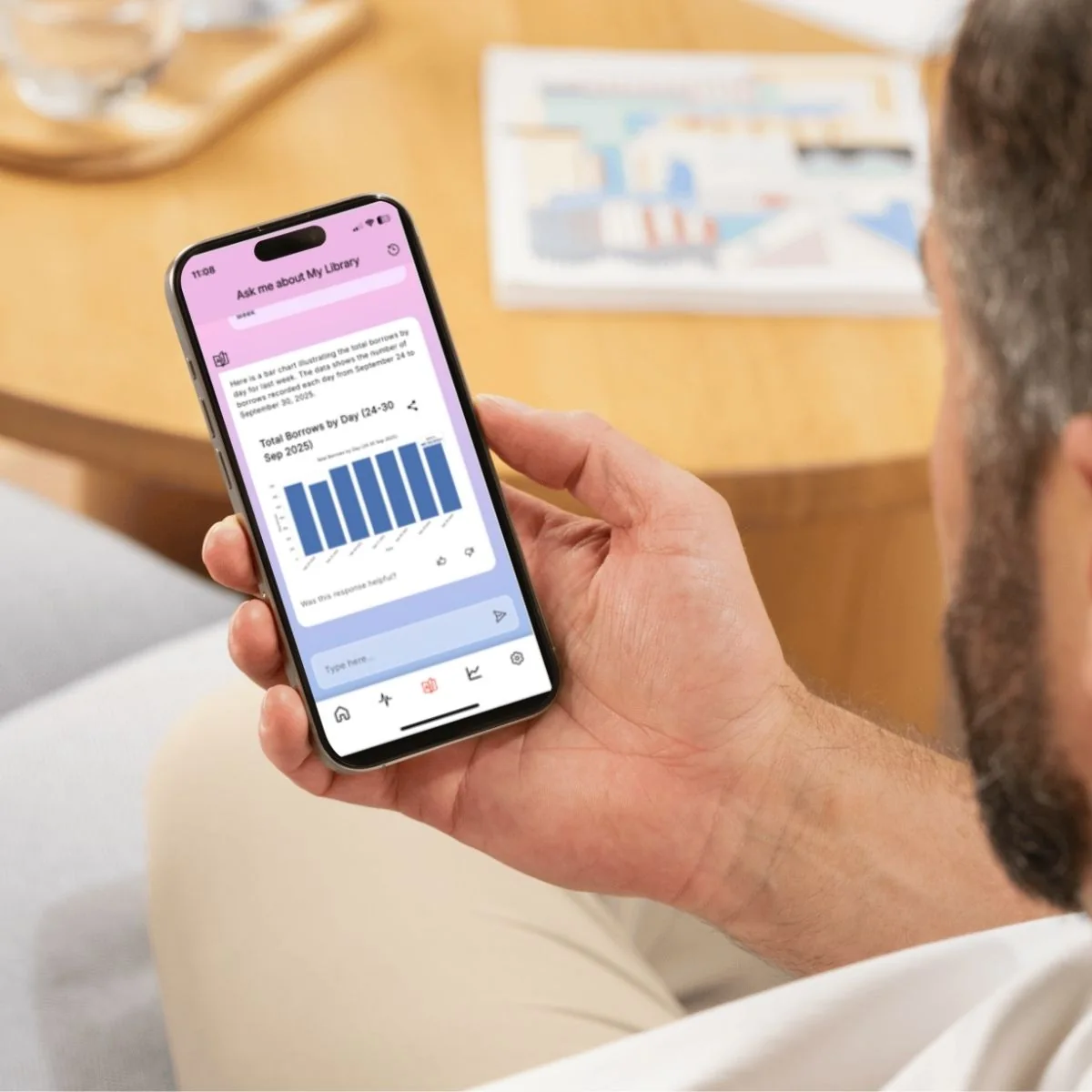
libraryConnect LINK: Managing Devices, Data and Support in One Place
See how libraryConnect LINK gives library teams a clearer way to monitor equipment, manage changes, troubleshoot issues, and use operational data.
RFID in Libraries: What It Is and What It Changes
Learn what RFID tags contain, what it takes to convert a collection, and what libraries should consider for checkout, security, and inventory.