

For decades, academic libraries have protected millions of dollars’ worth of materials using magnetic strip systems like Tattle Tape™, the gold standard for collection security. These systems safeguarded books and media when libraries primarily served as storage spaces.
The role of the campus library has transformed. Students still come for the books, but increasingly it’s the space itself that brings them in. With more technology, group study rooms, and flexible environments replacing rows of stacks, many institutions are rethinking how their collections and spaces work together.
From major research universities to small community colleges, libraries renovating or moving collections off-site are using the opportunity to modernize. They’re moving beyond basic security to RFID (Radio Frequency Identification), which does more than prevent theft. It simplifies inventory, speeds up checkout, and makes life easier for staff and patrons alike.
Scenes that once relied on manual barcode scans and static workflows are now automated, data-driven, and user-friendly. As more universities adopt RFID, its impact is becoming clear.
Why RFID Outperforms Barcodes
RFID reads multiple items at once. Barcodes can’t. That single difference reshapes how circulation works (Patil & Waddar, 2024).
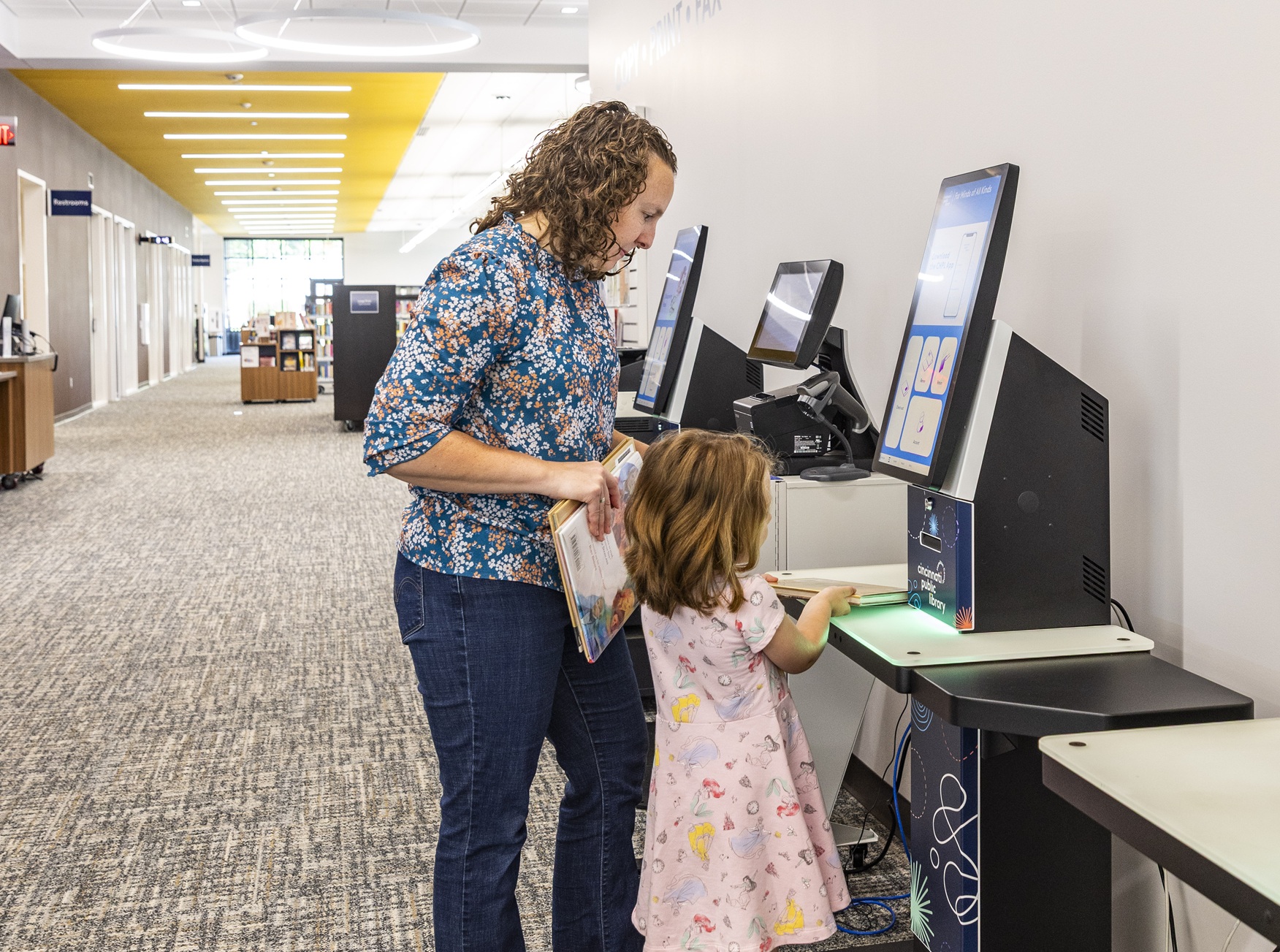
At a selfCheck 3000, students can drop several books onto the reader and complete checkout in seconds. All tags are read instantly, the account updates automatically, and security resets in one smooth motion.
For staff, the change is just as dramatic. What once took minutes now takes moments as checkouts happen up to 10 times faster, freeing librarians to focus on higher-value tasks.
With smartShelf borrow, shelves become instant check-in and check-out points, processing returns on contact regardless of how items land. Each unit can handle 200 to 400 items across multiple shelves (roughly 50 per shelf), automatically syncing with the ILS and reactivating security without staff intervention.
The result with RFID is measurable: faster workflows, fewer errors, and a cleaner, more accurate inventory (Ayre, 2020; Singh, 2022).
Bibliotheca’s selfCheck 3000 combines a large RFID reading area with a 22-inch touch display, adjustable height, and LED status indicators.
Measurable Efficiency Gains
Before RFID, a full inventory could take weeks. Staff moved shelf by shelf with barcode scanners or even pen-and-paper checklists, logging data in long, repetitive shifts prone to error.
With DLA inventoryWand, that routine changes completely. A librarian can walk down an aisle at normal speed while the wand scans 20 items per second, thousands of books per hour, identifying misplaced items, verifying shelf order, and flagging materials for weeding.
The result is measurable. What once took weeks now happens in a single day. Collections stay accurate, course reserves return to shelves faster, and library teams regain valuable time for teaching, research, and engagement.
As Patil and Waddar (2024) note, automation not only boosts productivity but also reduces the fatigue caused by repetitive tasks.
Bibliotheca’s DLA inventoryWand scans up to 20 items per second, enabling fast, accurate shelf audits and streamlined collection management.
Security and Accessibility
Academic libraries need to protect their collections while keeping spaces open and welcoming. Modern RFID gates make that balance easier, with wide, transparent panels that allow group entry and wheelchair access while detecting materials not properly checked out.
Gates also track visitor traffic automatically, providing data on peak usage times and entry patterns across access points. This insight helps teams plan staffing and manage space without compromising patron privacy.
RFID tags store only item identifiers, never personal data. When an item checks out, its tag links briefly to a user record and breaks upon return, in line with the American Library Association’s RFID Privacy Principles.

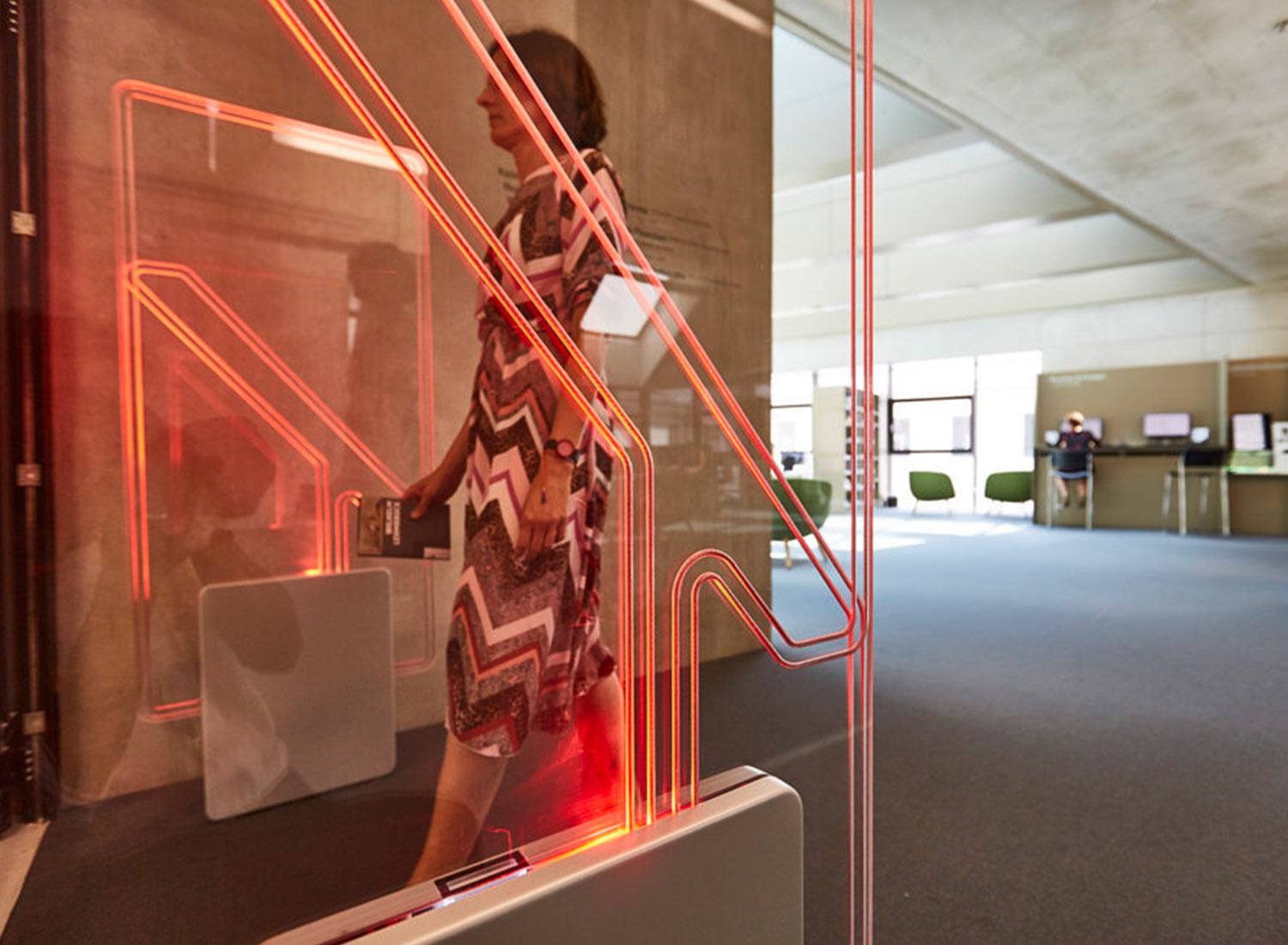
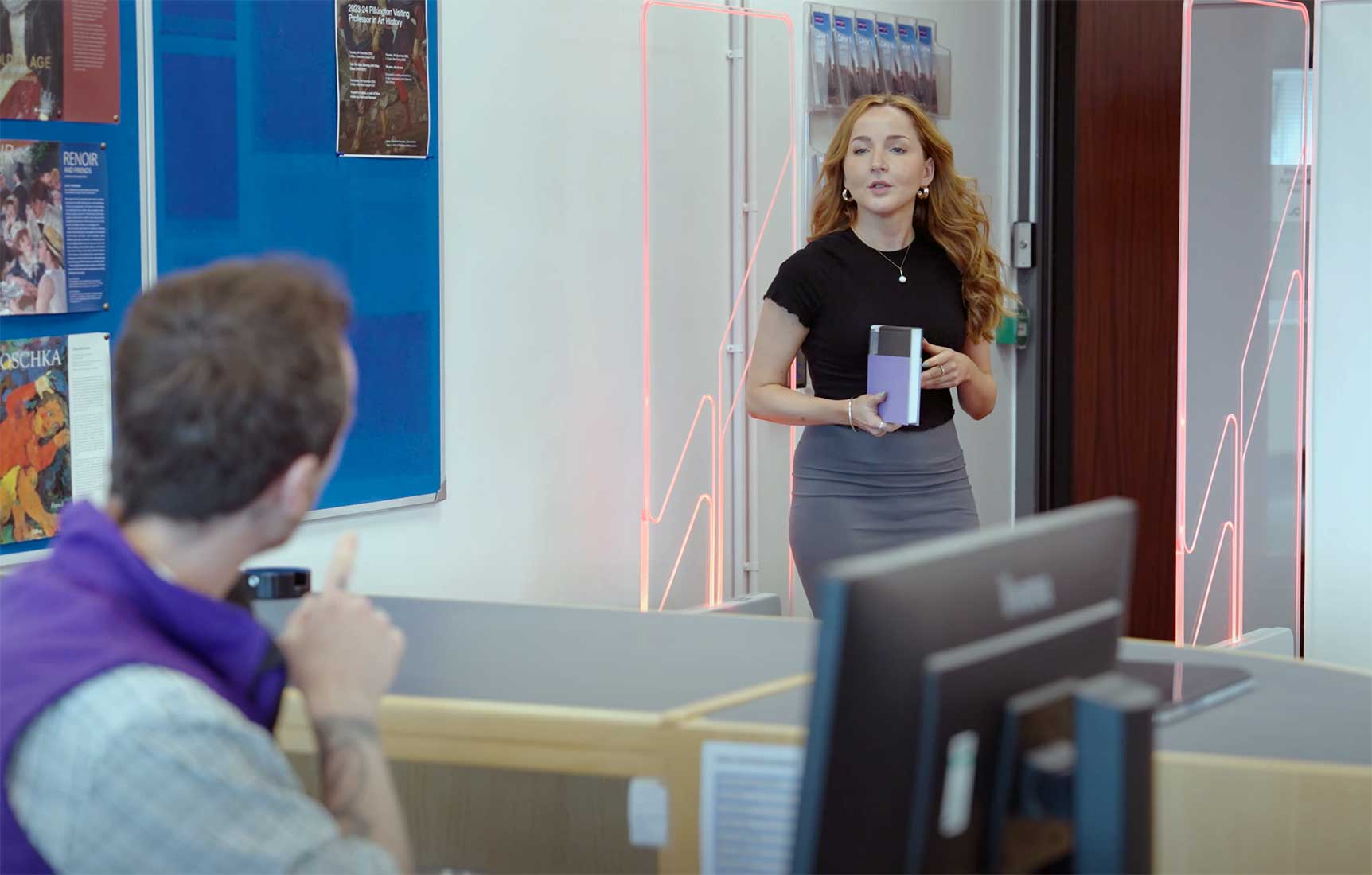
Bibliotheca’s RFID gates combine wide-aisle access with precise detection, protecting collections while maintaining an open, welcoming library environment.
Extending Access
Students study late. Faculty prep before early classes. Distance learners can’t always visit during staffed hours. Bibliotheca’s remoteLocker systems bridge that gap, providing secure, 24/7 access to library materials.
Installed in library vestibules, residence halls, or academic buildings, remoteLocker units let students pick up holds, course reserves, and equipment whenever their schedule allows. At Augsburg University’s Lindell Library, students have fully embraced the technology. Since installation, circulation has grown by 5% each year, and self-service now accounts for 98% of all transactions.
The units are modular and flexible. Libraries can configure multiple locker sizes, add transparent doors for browsing, or install outdoor models in high-traffic areas such as residence halls or parking lots. For academic libraries balancing access with limited staffing, remoteLockers extend service hours without increasing costs.

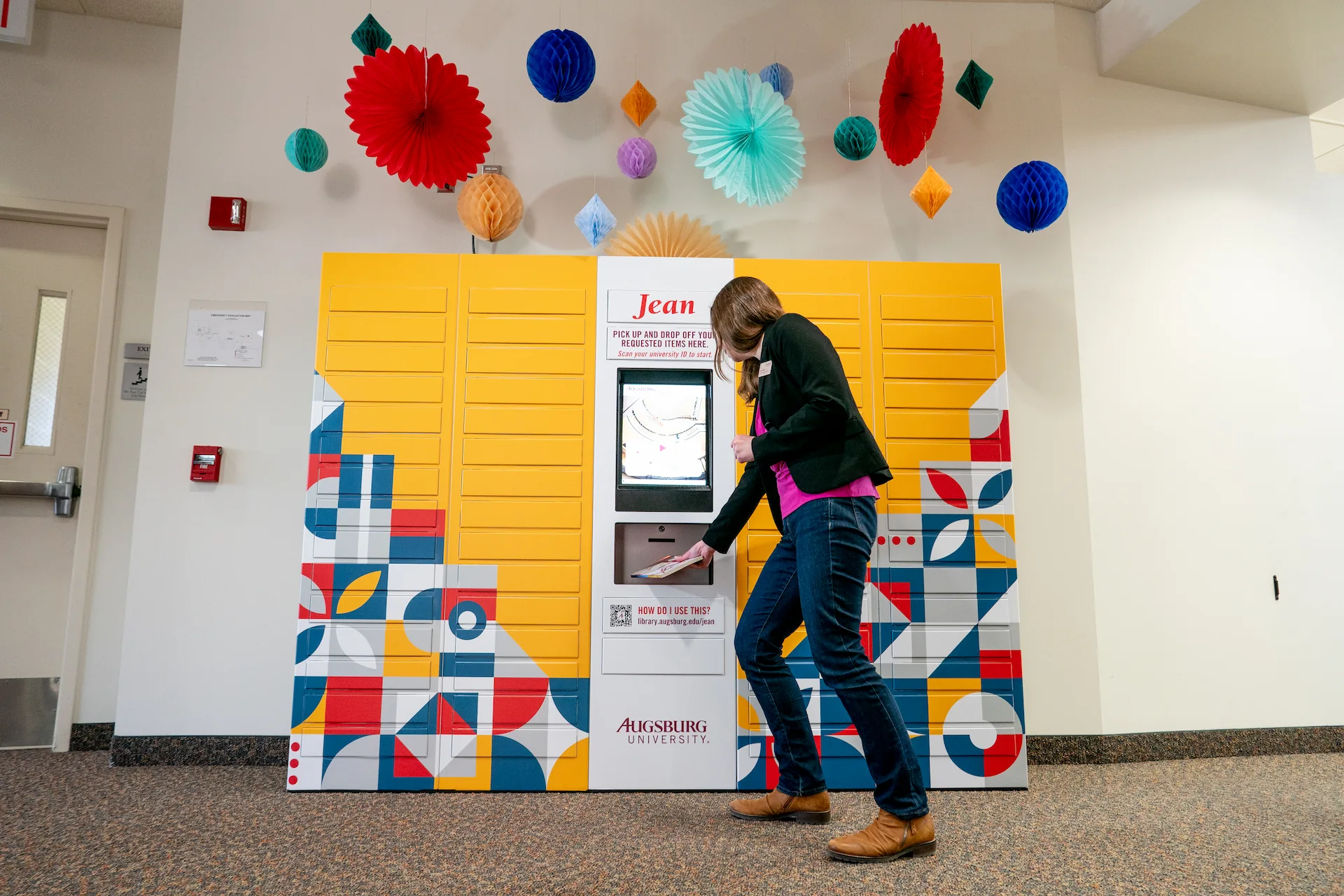


Bibliotheca’s remoteLocker and cloudCheck tablet help Lindell Library at Augsburg University provide independent access and 98% self-service use.
Building on RFID Infrastructure
Once collections are tagged, libraries can expand incrementally. The same RFID infrastructure that speeds circulation also supports analytics, automated sorting, and extended access. Bibliotheca’s libraryConnect LINK platform helps track circulation and space usage, building on the existing foundation without major system changes.
As these technologies mature, their value shifts from operational efficiency to strategic insight. RFID becomes adaptable infrastructure rather than a fixed endpoint, helping libraries reimagine spaces, refine staffing, and respond more precisely to user needs.
Libraries can also choose how to start their tagging projects. Many manage the process internally, while others rely on trusted partners such as Iron Mountain or Backstage Library Works, who have collaborated with Bibliotheca to tag large university collections across the country—including the University of San Diego, California. For libraries already planning collection moves or offsite storage, these partnerships make the transition to RFID seamless and scalable.
The University of San Diego renovated Copley Library, storing part of its 500,000-item collection off-site with Iron Mountain, where materials were RFID-tagged.
Taking the Next Step
RFID has come a long way in academic libraries.
What began as a way to improve security and speed up checkouts now does much more: it frees up staff time and gives students more independence.
Every book checked out automatically, every student who finds what they need without waiting in line, every staff member who can focus on helping people instead of processing returns—that’s where RFID pays off.
It’s not just about protecting the collection. It’s about making the library work better for everyone who uses it. Academic libraries have always been central to campus life. RFID helps keep them that way.
If you’re considering RFID for your own campus, we encourage you to visit a nearby university already using the technology—seeing it in action often makes the value clear. Or, connect with our team, and we’ll be happy to introduce you to an academic library that has successfully made the transition. Their firsthand perspective can help you envision what’s possible for your own space.
Bibliotheca partners with universities worldwide to design and implement RFID systems tailored to institutional needs. To learn more or request a consultation, visit https://info.bibliotheca.com/academic-rfid or contact the Bibliotheca team through the form below.

Get in touch
References
Ayre, L. B. (2020). RFID Costs, Benefits, and ROI. Library Technology Reports, American Library Association.
https://journals.ala.org/ltr/article/view/4513/5299
Chanda, A., & Sinha, M. K. (2020). RFID Technology in Academic Libraries of North-East India. Library Philosophy and Practice (e-journal).
https://papers.ssrn.com/sol3/Delivery.cfm/SSRN_ID3649947_code2374859.pdf
Patil, J., & Waddar, N. (2024). The Role of Radio Frequency Identification (RFID) Technology in Modern Libraries. International Journal for Research in Library Science, 10(2), 17–25.
https://www.ijrls.in/wp-content/uploads/2024/11/ijrls-1795.pdf
Singh, D. (2022). Use of RFID System and Improvement in Library Services. International Journal of Research in Library Science, 8(2), 53–60.
https://www.ijrls.in/wp-content/uploads/2022/03/ijrls-1522.pdf
Spread the Word

You may also like
Insights + Trends

AI for Librarians: Where to Start and 5 Real Use Cases
The skills behind a good reference interview are the same ones that make AI useful. A library director shows how, with five projects you can borrow.
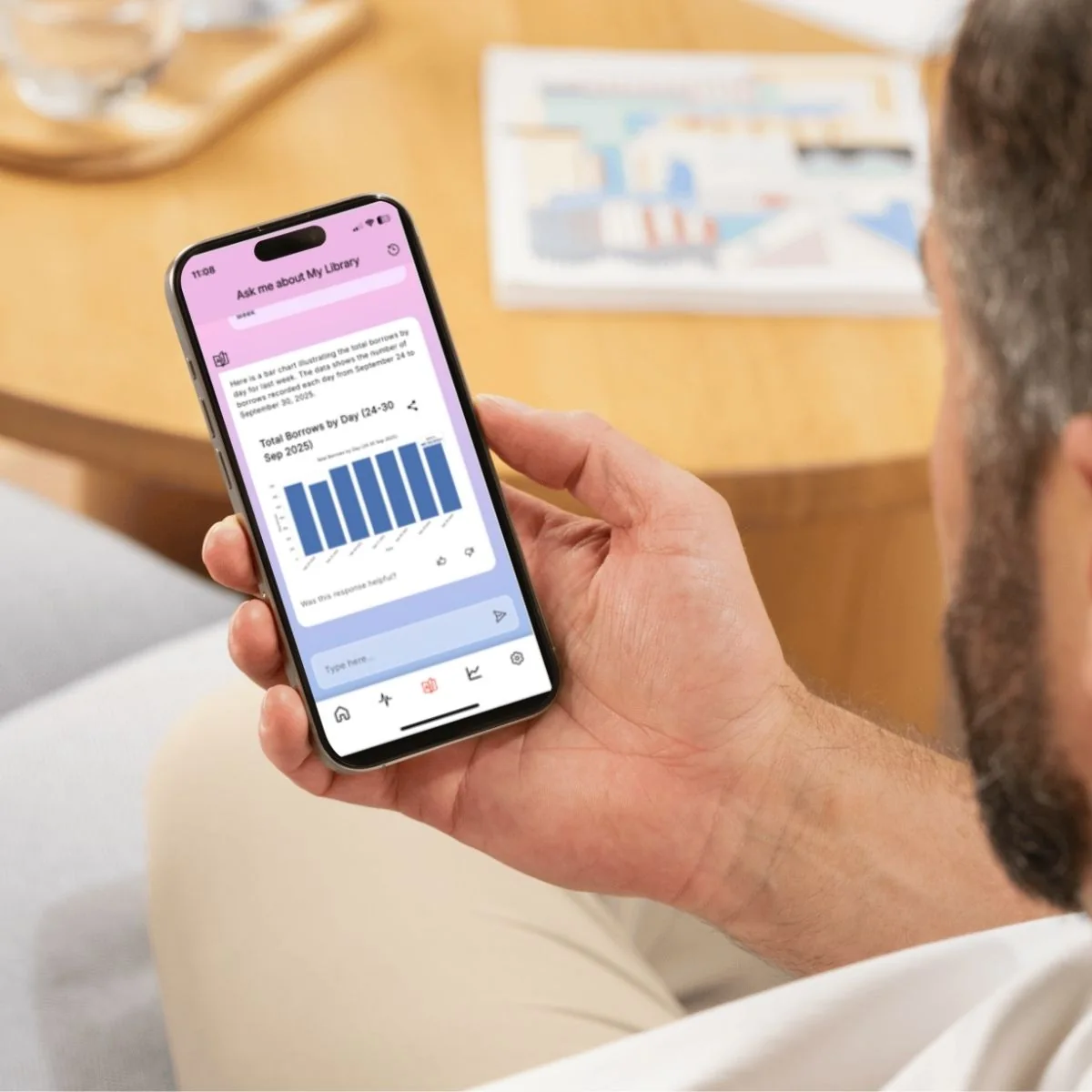
libraryConnect LINK: Managing Devices, Data and Support in One Place
See how libraryConnect LINK gives library teams a clearer way to monitor equipment, manage changes, troubleshoot issues, and use operational data.
RFID in Libraries: What It Is and What It Changes
Learn what RFID tags contain, what it takes to convert a collection, and what libraries should consider for checkout, security, and inventory.