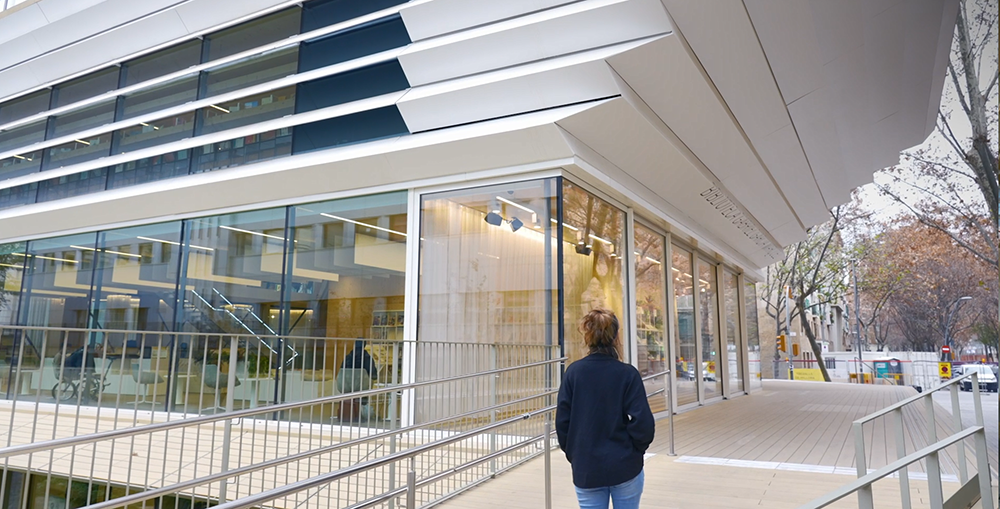
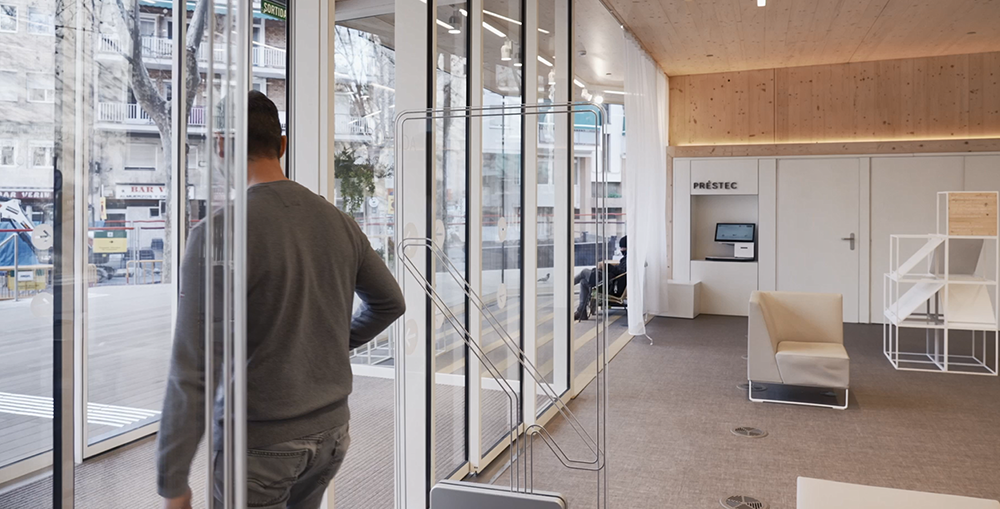
Since its opening just a few months ago, the Gabriel García Márquez Library in Barcelona, Spain, has been an inspiring example of how technology can elevate the patron experience and allow libraries to function as vital community hubs.
Using library technology to create a Third Place
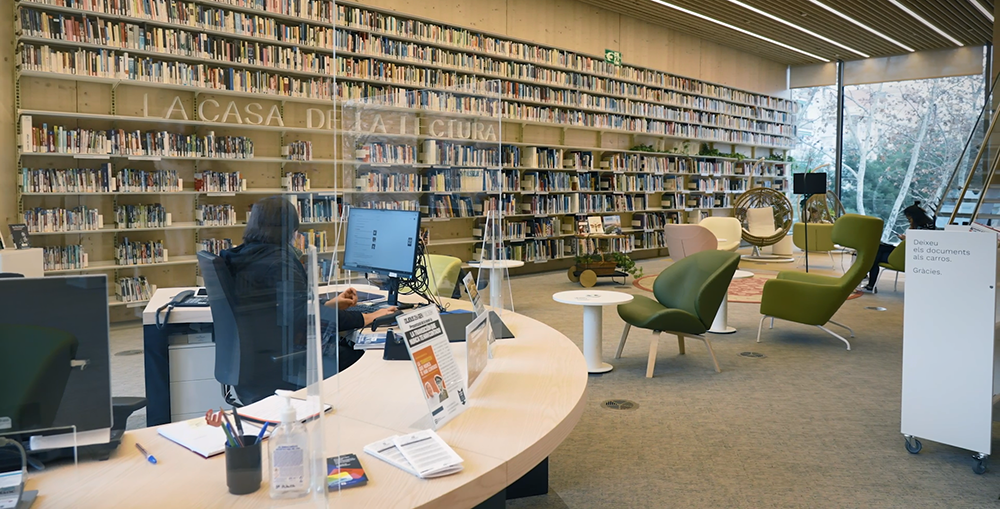
The Gabriel García Márquez Library was created to be so much more than a book repository. Instead, the library was designed to be a community “third place” — a space outside of work and home where people can study, work, and come together to connect.
The dynamic library is focused on promoting activities, experiences, and interactions that build community while inspiring life-long learning.
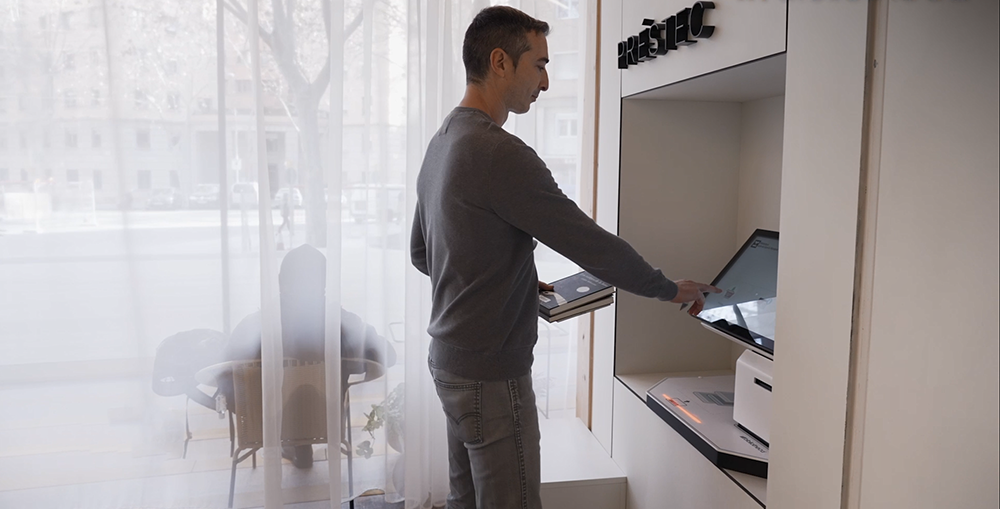
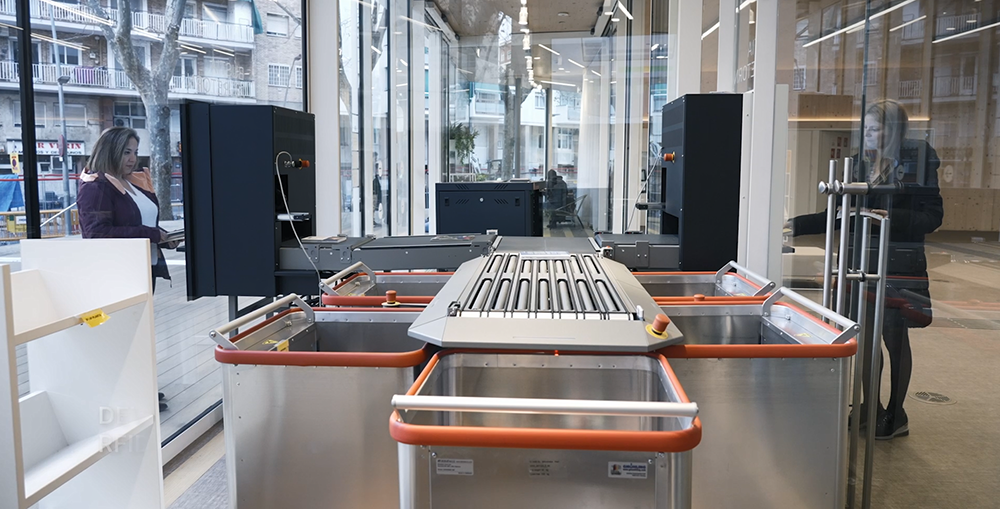
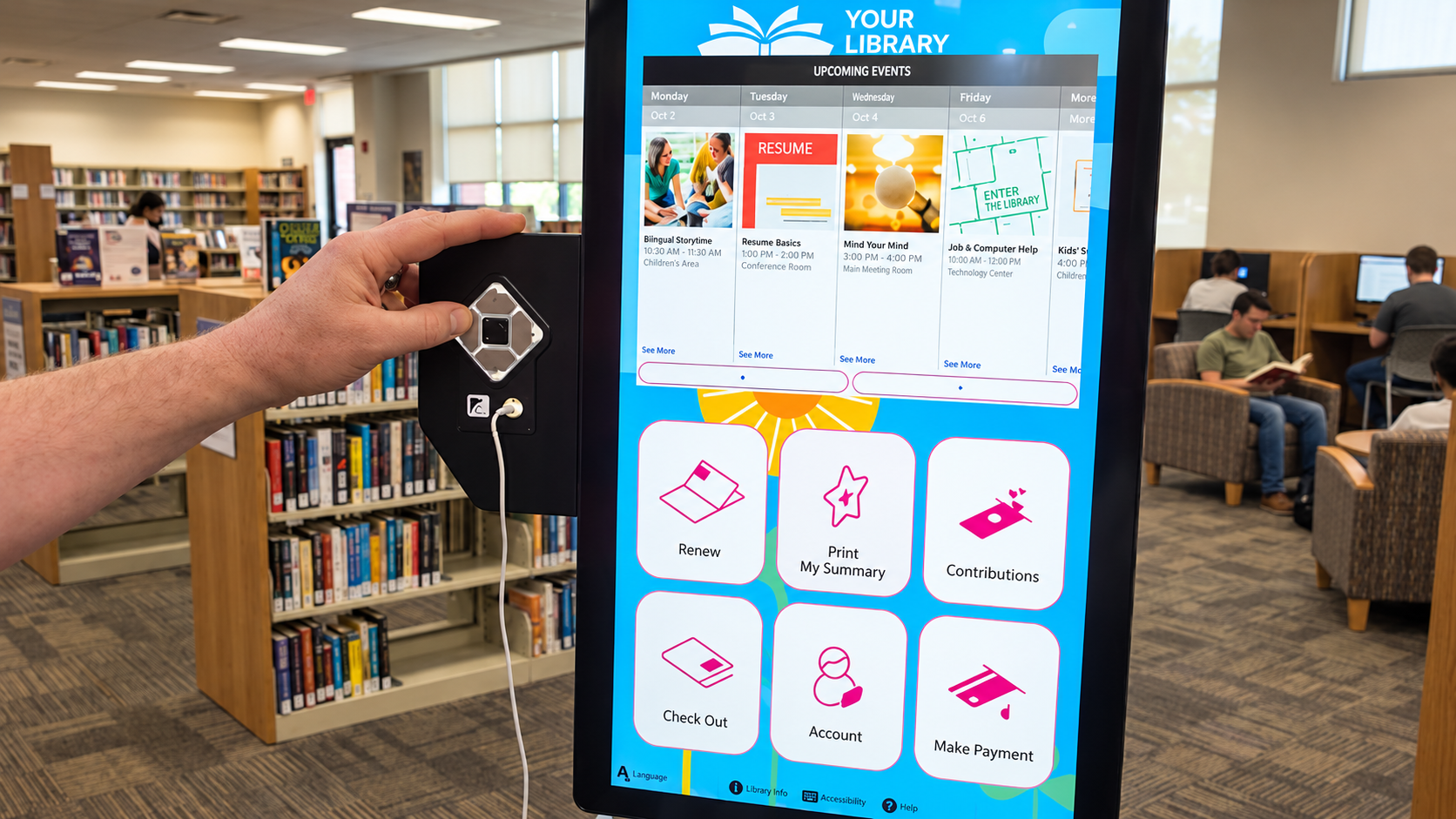
To create such a space, the library turned to technology to reduce manual administrative tasks and free the staff for more valuable interactions. Working with Bibliotheca and its IdCare partners, the library implemented a full range of automated solutions, including selfCheck self-service kiosks, RFID workstations, an automated materials handler and sorter (flexAMH), and premium RFID security gates.
“We designed Gabriel García Márquez Library to be a modern, relevant library,” says Neus Castellano, Library Director. “Offering patrons an autonomous self-service experience was critical.”
Automated library technology allows the library to provide better, more personalized service and makes routine tasks such as lending and room reservations more efficient.
“Library technology allows me to offer quality time to our patrons,” says Rebecca M. Retuerto, Librarian. “By automating lending and returns with the selfChecks and flexAMH, I can dedicate more time to personalized services such as specialized searches and consultations.”
Recognized for excellence
Thanks to Bibliotheca’s technological solutions, the Gabriel García Márquez Library has become a model for innovation and excellence in Spain. In just the first four months, the library has become one of the most visited in Barcelona and has been recognized for its high-quality services and support.
“We were serving up to 1,300 people a day in the first two months,” says Castellano. “This is truly a sought-after library.”